
"Why are all the Black kids sitting together in the cafeteria?"
Beverly Daniel Tatum

"Why are all the Black kids sitting together in the cafeteria?"
Age Rating, Reading Level & Content Guide
And Other Conversations About Race
by Beverly Daniel Tatum
The text is written at a 8th grade reading level, the subject matter is intended for middle graders (ages 9–12), and the content is mild with minimal sensitive material.
We may earn a commission from these links. Bookshop.org supports independent bookstores with every purchase.
About This Book
The cafeteria buzzes with voices and footsteps, but some tables stay quiet, filled with kids who look like each other. Why do these groups form like invisible walls? Understanding this could change how we see each other and ourselves.
Themes
Quick Assessment
This thought-provoking book explores why students of different racial backgrounds often group themselves separately in schools. It provides an accessible explanation of racial identity development and the social dynamics behind self-segregation, making it suitable for middle-grade readers interested in social studies and multicultural education. The updated edition offers timely insights for parents and educators seeking to foster understanding and communication across racial lines.
Why we rated "Why are all the Black kids sitting together in the cafeteria?" 12MS
"Why are all the Black kids sitting together in the cafeteria?" is written at a Level 8 reading level across 453 pages. Strong independent readers around grade 9.0 can typically handle this book on their own; with parent or teacher support, "Why are all the Black kids sitting together in the cafeteria?" works for readers up to grade 10.0.
We rate "Why are all the Black kids sitting together in the cafeteria?" as 12MS ("Moderate — Social") because the content sits in the "Mild" range — mild conflict — the kind a child encounters in normal play and sibling life. The strongest signals come from social complexity, thematic difficulty — these are the dimensions parents should evaluate against their reader's tolerance.
No specific content flags were raised by community reviewers, which is consistent with the mild intensity score.
Thematically, "Why are all the Black kids sitting together in the cafeteria?" explores multicultural, education, social justice, friendship, and coming of age — these threads give the book room to mean different things to different readers.
Good fit for
- ✓ Children in the Ages 9-12 range — the maturity and attention span match the story's pacing.
- ✓ Patient readers who enjoy slower, character-driven stories.
- ✓ Readers ready to talk through themes after they finish — there's enough substance for a meaningful conversation.
- ✓ Kids drawn to stories about multicultural, education, social justice.
- ✓ Curious kids who prefer real-world topics over made-up stories.
Maybe not for
- ! Readers whose emotional readiness lags behind their decoding skills — this book's intensity outruns its reading level, a classic "gifted kid" mismatch.
- ! Reluctant readers who need a fast hook — the pacing here rewards patience.
For Parents
Content Intensity
12MS — Moderate — SocialLight conflict or tension. Mild peril resolved quickly.
Was our "Mild" content intensity rating accurate for this book?
Reading Insights
Hook Factor
1/10A steady, thoughtful read that rewards patient readers.
Discussion Potential
4/10Good conversation starter with themes worth exploring together.
Book DNA
Multi-dimensional content fingerprint
Similar Books
Based on content and theme analysis
Black boy/white school
Brian F. Walker

Black boy/white school
Brian F. Walker
Why are so many minority students in special education?
Beth Harry
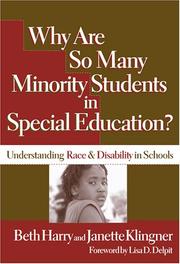
Why are so many minority students in special education?
Beth Harry
Lunch counter sit-ins
Danielle Smith-Llera

Lunch counter sit-ins
Danielle Smith-Llera
Black and white
Eric Walters

Black and white
Eric Walters
Racial Categorization of Multiracial Children in Schools
Jane Ayers Chiong

Racial Categorization of Multiracial Children in Schools
Jane Ayers Chiong
Black Friend
Frederick Joseph

Black Friend
Frederick Joseph
Details
Book Length
- ISBN
- 9780465060689
- Pages
- 453
- Publisher
- Basic Books
- Published
- 2017
- Type
- Nonfiction