
Juvenile Justice
Larry G. Mays

Juvenile Justice
Age Rating, Reading Level & Content Guide
by Larry G. Mays
The text is written at a 8th grade reading level, the subject matter is intended for middle graders (ages 9–12), and the content has moderate intensity with some emotionally heavy themes.
We may earn a commission from these links. Bookshop.org supports independent bookstores with every purchase.
About This Book
Here’s a secret: the rules for kids who get into trouble aren’t the same as for grown-ups. There’s a whole system designed just for young people, with stories and challenges you might never have heard before—but that’s only the beginning.
Themes
Quick Assessment
This book provides an in-depth look at the American juvenile justice system, blending historical context with current practices, theories, and research. It is suitable for middle-grade readers and offers balanced coverage of complex topics such as juvenile corrections, crime theories, and intervention strategies. Parents should note that while the content is presented clearly, it addresses real-world social and legal issues related to youth justice.
Why we rated Juvenile Justice 12ME
Juvenile Justice is written at a Level 8 reading level across 480 pages. Strong independent readers around grade 9.0 can typically handle this book on their own; with parent or teacher support, Juvenile Justice works for readers up to grade 10.0.
We rate Juvenile Justice as 12ME ("Moderate — Emotional") because the content sits in the "Moderate" range — moderate conflict that may involve loss, scary scenes, or interpersonal stakes. The strongest signals come from emotional weight, physical peril — these are the dimensions parents should evaluate against their reader's tolerance.
Specific content flags noted by reviewers: Bullying, Fear & Anxiety, Physical Danger.
Thematically, Juvenile Justice explores criminology, law, sociology, juvenile corrections, and social justice — these threads give the book room to mean different things to different readers.
Good fit for
- ✓ Children in the Ages 9-12 range — the maturity and attention span match the story's pacing.
- ✓ Patient readers who enjoy slower, character-driven stories.
- ✓ Readers ready to talk through themes after they finish — there's enough substance for a meaningful conversation.
- ✓ Kids drawn to stories about criminology, law, sociology.
- ✓ Curious kids who prefer real-world topics over made-up stories.
Maybe not for
- ! Readers who get easily upset by emotional or moderately dark scenes — the conflict here is real, not just background flavor.
- ! Reluctant readers who need a fast hook — the pacing here rewards patience.
For Parents
Content Intensity
12ME — Moderate — EmotionalReal stakes and emotional weight. May include sustained danger, loss, or bullying.
Content Flags
Was our "Moderate" content intensity rating accurate for this book?
Reading Insights
Hook Factor
1/10A steady, thoughtful read that rewards patient readers.
Discussion Potential
4/10Good conversation starter with themes worth exploring together.
Book DNA
Multi-dimensional content fingerprint
Similar Books
Based on content and theme analysis
Juvenile Justice
G. Larry Mays
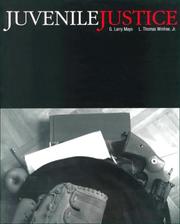
Juvenile Justice
G. Larry Mays
Juvenile Justice
James W. Burfeind
Juvenile Justice
James W. Burfeind
Juvenile Justice
John T. Whitehead

Juvenile Justice
John T. Whitehead
Juvenile justice
Kären M. Hess
Juvenile justice
Kären M. Hess
Juvenile crime
Roger Barr
Juvenile crime
Roger Barr
Juvenile crime
Lawrence V. Moore

Juvenile crime
Lawrence V. Moore
Details
Book Length
- ISBN
- 9781577664123
- Pages
- 480
- Publisher
- Waveland Pr Inc
- Published
- February 25, 2006
- Type
- Nonfiction