There’s a particular kind of quiet that settles over a house when a child who used to read stops reading. The stack on the nightstand goes untouched. Library books come home and go back in the same tote, unopened. And you start doing the thing every reading parent does — bribing, charting, negotiating, hovering — with the creeping sense that none of it is working.
Here’s the first thing worth knowing: a stall is normal, and most of the popular fixes make it worse. Not because you’re doing anything wrong, but because the tools schools and parents reach for by instinct — sticker charts, minute logs, points, “read for 20 minutes and then you get screen time” — are, according to a surprisingly deep body of research, some of the most reliable ways to turn a reader off reading.
Let me walk through what the evidence actually shows: why kids stall, what quietly backfires, and what works instead. Everything here is grounded in published research, not one parent’s lucky streak — because what worked for somebody else’s kid is a story, and what’s been tested across thousands of children is a map.
Let me make this concrete — it’s happening in my house
I run a company that rates children’s books, and I still can’t reliably get my own kid to read. So if you’re in the thick of this, you’re in good company.
My older son reads miles above his grade level. The summer he moved from second into third grade, he and I tore through Project Hail Mary and The Martian together — he became a full-blown Andy Weir fan. And then he ran out of Andy Weir to read, and just… stopped.
I did the obvious thing and reached for a big series to keep him busy — Harry Potter, seven fat books, surely that buys a year. Nope: he informed me he doesn’t like “magic.” He got curious about Percy Jackson because his friends were reading it, picked it up with real momentum, and then his interest quietly died about three-quarters of the way through. My wife tried reading Remarkably Bright Creatures aloud to him, carefully steering around the heavier adult moments, and that one, too, sits most-of-the-way-finished on the nightstand. Lately he’s retreated to graphic novels — the Avatar series, lots of pictures, not many words.
There is nothing wrong with graphic novels (more on that below). But I’m a dad who wants his advanced reader to be stretched, and right now I can’t find the book that does it. That’s where we are. No tidy ending.
I’m telling you this for a specific reason: I’m not going to sell you the trick that fixed my kid, because it hasn’t been fixed. A single parent’s success story — even mine — is an anecdote, and anecdotes are exactly how we all end up buying sticker charts that don’t work. So the rest of this piece is about what the research says, tested across thousands of children, not what happened to click in one house on one Tuesday.
First, breathe: the dip is developmental
If your child’s reading fell off a cliff somewhere around age nine, you are looking at one of the most well-documented patterns in children’s literacy.
Scholastic’s Kids & Family Reading Report (8th edition, 2023) surveys thousands of American families, and the age curve is stark. The share of children who are frequent readers — reading books for fun five to seven days a week — drops from 46% at ages 6–8, to 32% at 9–11, to 21% at 12–14, and 15% at 15–17. Reading enjoyment follows the same slide: 70% of 6–8-year-olds say they love reading, versus 46% of 12–17-year-olds.
This is so consistent that literacy researchers have a name for it — the “decline by nine.” It shows up internationally too. The OECD’s PISA program, which tests 15-year-olds across dozens of countries, found the share of students who read for enjoyment daily fell across most member countries over a single decade.
None of this means the decline is inevitable for your child, or that you should shrug and let it happen. It means the stall is a phase to be navigated, not a character flaw to be corrected — and that the frantic energy we bring to it can itself be part of the problem.
Why does the dip happen? A few forces converge around this age:
- Reading gets harder and less optional. Somewhere around third grade, school shifts from “learning to read” to “reading to learn.” Reading becomes a tool for extracting information, often from a textbook the whole class reads in lockstep, with no choice involved.
- Choice disappears. The books get assigned. The pace gets assigned. For a lot of kids, the exact moment reading stops being theirs is the moment it stops being fun.
- The competition gets fierce. A phone or a game console offers a faster, frictionless dopamine loop. A book asks a child to do the work of building the world in their own head.
Hold onto that word — choice. It turns out to be the hinge that almost everything else swings on.
What backfires (even though it feels productive)
This is the uncomfortable part, because most of what backfires is stuff we do out of love and diligence.
Rewards for reading
The instinct is bulletproof: my kid won’t read, so I’ll pay them to. A sticker, a prize, screen minutes, a pizza, points toward a class store. Get them reading, and the love will follow.
The research says it usually runs the other way. In 1999, three researchers — Deci, Koestner, and Ryan — pooled 128 studies in a landmark meta-analysis in Psychological Bulletin. The finding, replicated many times since, is called the overjustification effect: when you give someone an expected, tangible reward for doing an activity, their intrinsic motivation for that activity tends to drop once the reward goes away. Across the studies, rewards handed out for doing, finishing, or performing a task reduced people’s free-choice desire to keep doing it (effect sizes roughly in the −0.3 to −0.4 range — modest but real, and remarkably consistent).
Two details make this matter enormously for parents:
- The effect is stronger for children than for adults. Kids are especially quick to reason, “If I have to be paid to do this, it must not be worth doing on its own.”
- It’s the expected reward that does the damage — not the nice thing itself. In the same body of work, unexpected rewards (a surprise, given after, with no strings promised in advance) don’t undermine motivation at all. A classic earlier study by Lepper and Greene put this on the map: preschoolers who were promised a “Good Player” award for drawing later drew less on their own than kids who drew for nothing — or who got the very same award as a surprise.
The lesson isn’t “never do anything nice.” It’s that dangling a reward in advance to get a reluctant reader reading is the specific move most likely to cement the reluctance.
Mandatory reading logs and minute-tracking
The nightly reading log — read 20 minutes, write it down, get a parent signature — is nearly universal in elementary school. It feels like accountability. It is also, as far as I can tell, the single most direct experimental test of “making reading a tracked chore,” and it did not go well.
In a randomized study, second- and third-graders (112 kids, ages 6–8) were assigned either a mandatory log (20 minutes a night, parent-signed) or a voluntary one. After two months, the mandatory-log kids’ interest in reading had gone down (3.06 → 2.89 on the scale) while the voluntary-log kids’ interest went up (3.08 → 3.29). Their attitudes toward reading for fun moved the same way — worse for the mandatory group, better for the voluntary one.
It’s one modest, short study, so I won’t oversell it. But it points the same direction as the whole overjustification literature: the surveillance and the minimum-minutes requirement turned reading into something done to the child rather than by the child, and interest followed.
Points-and-quiz programs
Many schools run computerized reading-incentive systems: the child reads a “leveled” book, takes a comprehension quiz, earns points, and climbs a chart. The evidence that these programs build a lasting love of reading is thin and mixed at best — and everything above predicts why. Points and quizzes bolt an expected-reward-plus-surveillance structure onto reading. They can nudge up the volume a child reads while the program runs; there’s little sign the appetite survives once the points stop. (At HootRated we deliberately keep our own reading-level data away from any points-and-quiz mechanic for exactly this reason.)
Trading screen time for reading
“Read for 30 minutes and you can have the iPad” feels like a fair, even clever, trade. But look at what it teaches: reading is the toll, screens are the destination. You’ve just told your child, in the clearest possible terms, that reading is the unpleasant thing you endure to earn the pleasant thing. That’s the overjustification effect wearing a parenting hat — reading becomes a means to an end, and the end isn’t the book.
Manage screens if you need to (most of us do). Just manage them on their own terms — a schedule, a family rule — rather than making a book the coin your child pays for a game.
What actually works
The good news is that the fixes are gentler, cheaper, and more pleasant than the charts and logs — which is a nice change, because the thing you’re trying to rebuild is pleasure.
1. Give the choice back
If there’s a single most-supported lever, it’s letting the child choose what to read. Choice is the active ingredient in “reading for pleasure,” and reading for pleasure is a genuine academic superpower, not a soft nicety. PISA’s most striking finding on this: students from the poorest homes who were highly engaged readers outscored students from the wealthiest homes who weren’t. Engagement — which grows out of choice and enjoyment — was a bigger lever than family income.
Practically: let them pick at the library with no veto. Let them abandon a book they’re not enjoying (adults do this constantly). Stock the house with options and let them graze.
2. Let “junk” count
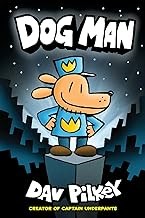
This is where a lot of well-meaning parents accidentally sabotage themselves — steering a kid off the “baby” series, the comic, the joke book, the fourth re-read of the same Dog Man, toward something more “worthy.”
Don’t. Graphic novels are real reading. Re-reading is real reading. Audiobooks are real reading. The comfort series is real reading. Volume and enjoyment are what build fluent, willing readers, and kids build both on the books they find delicious — not the ones that photograph well on a shelf. A child who reads twelve graphic novels this summer is a child who read all summer.
3. Keep reading aloud — long past when they “need” it
Parents tend to retire the bedtime read-aloud the moment a child can decode on their own. Keep going. Reading aloud lets you carry a child into stories a notch beyond what they’d tackle solo, keeps reading a warm shared ritual rather than a solo assignment, and quietly models that reading is something worth doing for its own sake. It’s one of the most enjoyable, least gimmicky things on this list.
4. Let them see you read
The Scholastic data on this is almost comically strong. Among frequent readers, 80% say a lot of the people in their lives enjoy reading. Among infrequent readers, only 26% say the same. Kids read when reading is visibly part of how their people live. You don’t have to lecture — you have to be caught, repeatedly, with your nose in a book you’re clearly enjoying.
5. Match the book to the kid — not the kid to the level
A “reading level” is a floor and a ceiling, not a personality. The fastest way to restart a stalled reader is a book that hits their actual obsession — the kid who loves sharks, or soccer, or gross facts, or a specific video game — even if it’s “below level” or a magazine or a nonfiction brick of world records. Interest beats level.
This, honestly, is the whole reason HootRated exists. We rate every book on two axes — reading level and content intensity — so you can find a book that fits your child’s ability and their emotional comfort at the same time. It’s especially built for the reading-level gap: the advanced decoder who can read the words of a book but isn’t ready for its content. The right match is a book they want to be holding.
6. Protect the time and lower the stakes
Make a small, undemanding, predictable space for reading — twenty quiet minutes before bed, a basket of books in the car, a Saturday-morning nobody-has-to-be-anywhere hour — and then ask nothing of it. No log. No quiz. No “tell me what happened.” Reading you don’t have to report on is reading that gets to just be a pleasure again.
Put together, the pattern is simple
Every backfire on this list has the same shape: it makes reading a task the child performs for someone else — for a sticker, a signature, a point, a screen. Every fix has the opposite shape: it hands reading back to the child as something that is theirs, chosen, and pleasant.
So if your reader has stalled, the move is less about pushing harder and more about removing what you added. Take away the log. Retire the reward. Uncouple it from screens. Stop steering the choices. Refill the house with tempting, kid-chosen books, keep reading aloud, get caught reading yourself — and then get out of the way.
The reader’s still in there. Most of the time, they’ve just been waiting for it to feel like theirs again.
As for my own son and the book that finally stretches him — I’m still looking. But I’m looking the way the research says to: the whole library shelf open to him, following his actual interests instead of my ambitions for them, and not a sticker chart in sight. When I find it, it won’t be because I forced it. It’ll be because I finally handed him the right book.
Teaching a whole class, not just your own kid? The same evidence points to a different playbook in the classroom. See our companion guide, how to get a whole class reading.
Frequently asked questions
Is it normal for my child to suddenly lose interest in reading around age 8 or 9?
Yes. It’s one of the most consistent patterns in children’s literacy — sometimes called the “decline by nine.” National survey data shows the share of kids who read for fun most days drops sharply between ages 8 and 12. It’s a phase to navigate, not a character flaw.
Do reward charts and reading incentives actually work?
Rarely, and often they backfire. Decades of motivation research (the “overjustification effect”) show that promising an expected reward for reading tends to lower a child’s own desire to read once the reward stops — and the effect is stronger for children than adults. Surprise rewards given afterward, with no strings promised in advance, don’t cause this harm.
Should I make my child read before screen time?
It’s better to keep the two separate. Trading reading for screen time frames reading as the unpleasant “toll” a child pays to reach the fun thing, which teaches exactly the wrong lesson. Manage screens with their own schedule or rules, and let reading stay a pleasure rather than a price.
Do graphic novels and audiobooks count as real reading?
Yes. Volume and enjoyment are what build willing, fluent readers, and children build both fastest on the formats and stories they love. A summer of graphic novels is a summer of reading.
My child reads far above grade level but won’t read anything challenging — what do I do?
This is the reading-level gap, and it’s incredibly common: a child who can decode almost anything but has run out of books that are both intellectually engaging and emotionally age-appropriate. Chasing the next “level up” usually backfires, because the books at that level often carry mature content a young reader isn’t ready for. The fix is to match on interest and content, not just difficulty — find books that are genuinely challenging but still land inside their emotional comfort zone. (This is exactly the match HootRated’s two-axis ratings are built to make.)
What’s the single most effective thing I can do?
Give the choice back. Let your child pick what they read — even if it’s “below level,” a comic, or a re-read — and pair that with easy access to lots of books and a visible reading habit of your own. Choice plus access plus modeling is the most reliable combination in the research.
Sources
- Deci, E. L., Koestner, R., & Ryan, R. M. (1999). A meta-analytic review of experiments examining the effects of extrinsic rewards on intrinsic motivation. Psychological Bulletin, 125(6), 627–668.
- Lepper, M. R., Greene, D., & Nisbett, R. E. (1973). Undermining children’s intrinsic interest with extrinsic rewards: A test of the “overjustification” hypothesis. Journal of Personality and Social Psychology, 28(1), 129–137.
- Pak, S. S., & Weseley, A. J. (2012). The effect of mandatory reading logs on children’s motivation to read. Journal of Research in Education, 22(1), 251–265.
- Scholastic (2023). Kids & Family Reading Report, 8th Edition.
- OECD (2011). Do Students Today Read for Pleasure? PISA in Focus No. 8. (Source for the decade-long decline in daily reading for enjoyment.)
- OECD (2002). Reading for Change: Performance and Engagement Across Countries (PISA 2000); restated in PISA 2009 Results, Vol. III (Learning to Learn). (Source for the finding that highly engaged readers from the lowest-status homes outscore disengaged readers from the highest-status homes.)
- Background on free voluntary reading and the primacy of access and volume draws on the work of Stephen Krashen (The Power of Reading) and Richard Allington on independent reading.