What's wrong with the girl next door?
Rachel Appleton McAuley
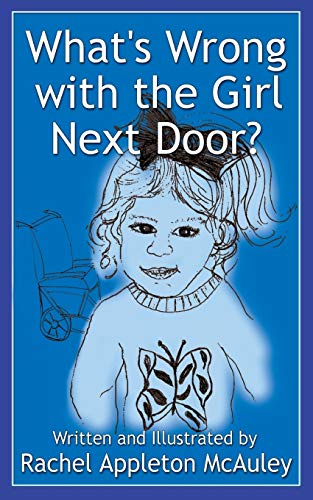
What's wrong with the girl next door?
Age Rating, Reading Level & Content Guide
by Rachel Appleton McAuley
The text is written at a 2nd grade reading level, the subject matter is intended for younger children (ages 5–8), and the content is mild with minimal sensitive material.
We may earn a commission from these links. Bookshop.org supports independent bookstores with every purchase.
About This Book
The girl next door wheels down the sidewalk, her smile bright despite the stares. Suddenly, a ball rolls toward her—will she catch it or will everything change in a blink? The moment hangs in the air, waiting to unfold.
Quick Assessment
This early reader gently explores cerebral palsy through the eyes of a child, fostering empathy and understanding among young readers aged 5 to 8. It encourages acceptance and inclusivity by portraying the experiences of children with disabilities in a relatable and positive way. Parents should know it handles its themes with warmth and accessibility, making it a helpful tool for conversations about differences and kindness.
Why we rated What's wrong with the girl next door? 7LE
What's wrong with the girl next door? is written at a Level 2 reading level across 24 pages. Strong independent readers around grade 3.0 can typically handle this book on their own; with parent or teacher support, What's wrong with the girl next door? works for readers up to grade 4.0.
We rate What's wrong with the girl next door? as 7LE ("Light — Emotional") because the content sits in the "Mild" range — mild conflict — the kind a child encounters in normal play and sibling life. Across our four dimensions (emotional, physical, social, thematic) the book reads as evenly mild; no single dimension stands out as a concern.
No specific content flags were raised by community reviewers, which is consistent with the mild intensity score.
Thematically, What's wrong with the girl next door? explores disability representation, friendship, family, and coming of age — these threads give the book room to mean different things to different readers.
Good fit for
- ✓ Children in the Ages 5-8 range — the maturity and attention span match the story's pacing.
- ✓ Patient readers who enjoy slower, character-driven stories.
- ✓ Kids drawn to stories about disability representation, friendship, family.
Maybe not for
- ! Reluctant readers who need a fast hook — the pacing here rewards patience.
For Parents
Content Intensity
7LE — Light — EmotionalLight conflict or tension. Mild peril resolved quickly.
Was our "Mild" content intensity rating accurate for this book?
Reading Insights
Hook Factor
1/10A steady, thoughtful read that rewards patient readers.
Discussion Potential
3/10A lighter read — great for independent enjoyment.
Book DNA
Multi-dimensional content fingerprint
Similar Books
Based on content and theme analysis
Best friend next door
Carolyn Mackler

Best friend next door
Carolyn Mackler
The boy next door
Katie Van Ark

The boy next door
Katie Van Ark
Disabled people
White, Peter
Disabled people
White, Peter
A short history of the girl next door
Jared Reck
A short history of the girl next door
Jared Reck
What's wrong with my brain?
Sheila Stewart

What's wrong with my brain?
Sheila Stewart
Girl Who Became Strong
Laura Paoletti

Girl Who Became Strong
Laura Paoletti
Details
Book Length
- ISBN
- 1933912405
- Pages
- 24
- Publisher
- Ideas Into Books Westview
- Published
- 2006
- Type
- Fiction