
Visual strategies for improving communication
Linda A. Hodgdon

Visual strategies for improving communication
Age Rating, Reading Level & Content Guide
Practical Supports for School and Home
by Linda A. Hodgdon
The text is written at a 6th grade reading level, the subject matter is intended for middle graders (ages 9–12), and the content is mild with minimal sensitive material.
We may earn a commission from these links. Bookshop.org supports independent bookstores with every purchase.
About This Book
Some kids see the world through pictures instead of words—and that can change everything about how they learn and talk. This book shows how using visual ways to communicate can unlock big ideas and help solve tricky problems. It’s proof that everyone’s brain works differently, and that matters more than you think.
Themes
Quick Assessment
This practical guide offers visual strategies to support children with autism and a variety of communication challenges. Designed for educators, speech-language pathologists, and parents, it provides clear examples and tools to enhance communication and self-management for children aged 9 to 12 with moderate to severe communication disorders. The book covers a wide range of conditions and is sensitive to the needs of learners with diverse abilities.
Why we rated Visual strategies for improving communication 11LP
Visual strategies for improving communication is written at a Level 6 reading level across 230 pages. Strong independent readers around grade 7.0 can typically handle this book on their own; with parent or teacher support, Visual strategies for improving communication works for readers up to grade 8.0.
We rate Visual strategies for improving communication as 11LP ("Light — Physical") because the content sits in the "Mild" range — mild conflict — the kind a child encounters in normal play and sibling life. Across our four dimensions (emotional, physical, social, thematic) the book reads as evenly mild; no single dimension stands out as a concern.
Specific content flags noted by reviewers: Mild Peril, Emotional: Communication Challenges.
Thematically, Visual strategies for improving communication explores learning disabled children - education, visual learning, communication, and disability representation — these threads give the book room to mean different things to different readers.
Good fit for
- ✓ Children in the Ages 9-12 range — the maturity and attention span match the story's pacing.
- ✓ Patient readers who enjoy slower, character-driven stories.
- ✓ Kids drawn to stories about learning disabled children - education, visual learning, communication.
- ✓ Curious kids who prefer real-world topics over made-up stories.
Maybe not for
- ! Reluctant readers who need a fast hook — the pacing here rewards patience.
For Parents
Content Intensity
11LP — Light — PhysicalLight conflict or tension. Mild peril resolved quickly.
Content Flags
Was our "Mild" content intensity rating accurate for this book?
Reading Insights
Hook Factor
1/10A steady, thoughtful read that rewards patient readers.
Discussion Potential
1/10A lighter read — great for independent enjoyment.
Book DNA
Multi-dimensional content fingerprint
Similar Books
Based on content and theme analysis
Early Visual Skills
Diana Williams
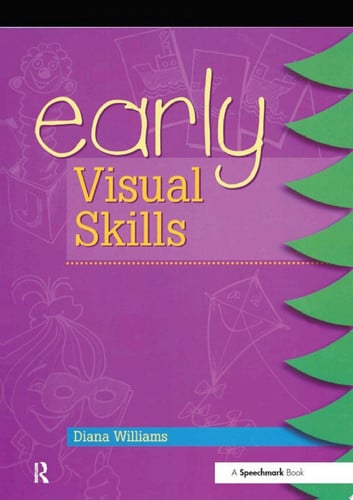
Early Visual Skills
Diana Williams
Strategies for success
Lynn Meltzer
Strategies for success
Lynn Meltzer
Strategies for teaching retarded and special needs learners
Edward A. Polloway
Strategies for teaching retarded and special needs learners
Edward A. Polloway
Strategy instruction for students with learning disabilities
Reid, Robert
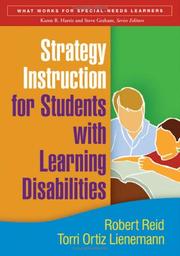
Strategy instruction for students with learning disabilities
Reid, Robert
Visual impairment in the schools
Randall K. Harley

Visual impairment in the schools
Randall K. Harley
Enhancing Communication for Individuals with Autism
Ralf W. Schlosser
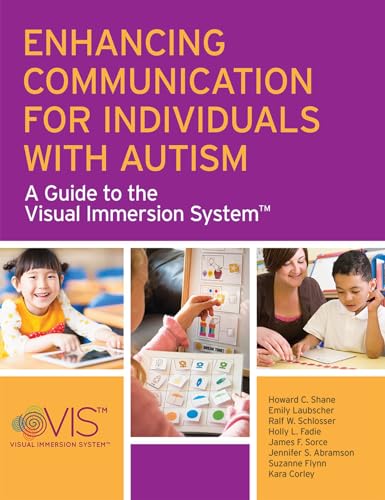
Enhancing Communication for Individuals with Autism
Ralf W. Schlosser
Details
Book Length
- ISBN
- 0961678615
- Pages
- 230
- Publisher
- Quirk Roberts Publishing
- Published
- 1995
- Type
- Nonfiction