The vanishing American adult
Benjamin E. Sasse
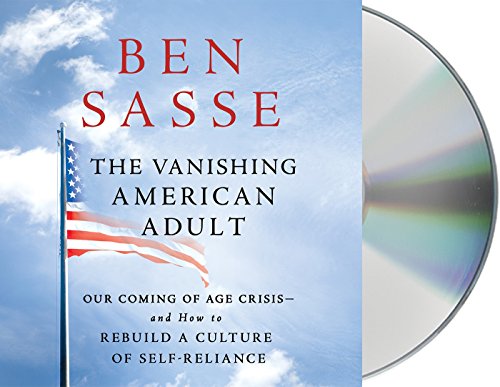
The vanishing American adult
Age Rating, Reading Level & Content Guide
Our Coming-of-Age Crisis--and How to Rebuild a Culture of Self-Reliance
by Benjamin E. Sasse
The text is written at a 2nd grade reading level, the subject matter is intended for teens (ages 13+), and the content has moderate intensity with some emotionally heavy themes.
We may earn a commission from these links. Bookshop.org supports independent bookstores with every purchase.
About This Book
The sharp clang of a school bell echoes through empty hallways, a reminder that growing up is harder than ever before. Imagine a world where many young people don’t leave home or learn to take care of themselves. What happens when the steps to adulthood start to vanish, and why does it matter so much?
Themes
Quick Assessment
This book explores concerns about modern young adults facing challenges in becoming independent and self-reliant in today’s society. It discusses how changes in parenting, education, and societal expectations impact the transition to adulthood, offering suggestions for encouraging resilience and responsibility. Suitable for older teens, it addresses complex themes around family, work ethic, and civic duty without graphic content.
Why we rated The vanishing American adult 7ME
The vanishing American adult is written at a Level 2 reading level across 11 pages. Strong independent readers around grade 3.0 can typically handle this book on their own; with parent or teacher support, The vanishing American adult works for readers up to grade 4.0.
We rate The vanishing American adult as 7ME ("Moderate — Emotional") because the content sits in the "Moderate" range — moderate conflict that may involve loss, scary scenes, or interpersonal stakes. The strongest signals come from emotional weight, social complexity, thematic difficulty — these are the dimensions parents should evaluate against their reader's tolerance.
No specific content flags were raised by community reviewers, which is consistent with the moderate intensity score.
Thematically, The vanishing American adult explores parenting, adulthood, conflict of generations, coming of age, and social justice — these threads give the book room to mean different things to different readers.
Good fit for
- ✓ Children in the Ages 13+ range — the maturity and attention span match the story's pacing.
- ✓ Patient readers who enjoy slower, character-driven stories.
- ✓ Readers ready to talk through themes after they finish — there's enough substance for a meaningful conversation.
- ✓ Kids drawn to stories about parenting, adulthood, conflict of generations.
- ✓ Curious kids who prefer real-world topics over made-up stories.
Maybe not for
- ! Readers who get easily upset by emotional or moderately dark scenes — the conflict here is real, not just background flavor.
- ! Reluctant readers who need a fast hook — the pacing here rewards patience.
For Parents
Content Intensity
7ME — Moderate — EmotionalReal stakes and emotional weight. May include sustained danger, loss, or bullying.
Was our "Moderate" content intensity rating accurate for this book?
Reading Insights
Hook Factor
1/10A steady, thoughtful read that rewards patient readers.
Discussion Potential
4/10Good conversation starter with themes worth exploring together.
Book DNA
Multi-dimensional content fingerprint
Similar Books
Based on content and theme analysis
Vanishing American Adult
Ben Sasse
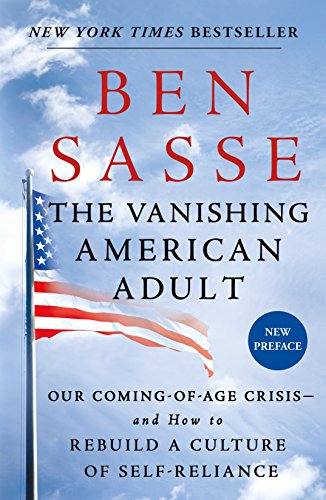
Vanishing American Adult
Ben Sasse
On the frontier of adulthood
Richard A. Settersten Jr., Frank F. Furstenberg, Rubén G. Rumbaut

On the frontier of adulthood
Richard A. Settersten Jr., Frank F. Furstenberg, Rubén G. Rumbaut
The collapse of parenting
Leonard Sax
The collapse of parenting
Leonard Sax
Adult children who won't grow up
Larry V. Stockman

Adult children who won't grow up
Larry V. Stockman
Generation What?
Bess Vanrenen

Generation What?
Bess Vanrenen
The young adult generation
Allen J. Moore

The young adult generation
Allen J. Moore
Details
Book Length
- ISBN
- 9781427283092
- Pages
- 11
- Publisher
- St. Martin's Press
- Published
- 2017
- Type
- Nonfiction