
Reviewed by HootRated editorial · Last updated
The only girl in school
Natalie Standiford

The only girl in school
Age Rating, Reading Level & Content Guide
Illustrated by Nathan Durfee
The text is written at a 3rd grade reading level, the subject matter is intended for middle graders (ages 9–12), and the content is mild with minimal sensitive material. Its HootRating code, LE, means mild content, mostly emotional.
We may earn a commission from these links.
About This Book
The quiet shuffle of footsteps fills the empty hallways, and the buzz of whispered voices seems to swirl all around her. She’s the only girl in the whole school, standing out in every crowd and feeling the weight of being different. Sometimes, being the only one can be lonely, but it also means discovering a strength no one else can see.
Themes
Quick Assessment
Claire's best friend moves away, leaving her the only girl in her entire elementary school, and she must navigate a lonely year of shifting friendships, a persistent bully, and an unwanted crush. The story is lighthearted and funny, with sports, sailing, and classroom humor balancing its emotional moments. Expect mild social conflict and some bullying handled with resolution and kid-friendly humor; nothing here is intense or graphic.
Why we rated The only girl in school LE (Mild)
The only girl in school is written at a Level 3-4 reading level across 212 pages. Reading-wise, most kids in grade 5 and up can manage The only girl in school on their own; younger readers can enjoy it with a parent or teacher reading along.
We rate The only girl in school as LE (Mild, mostly emotional) because the content sits in the "Mild" range — mild conflict — the kind a child encounters in normal play and sibling life. Across our four dimensions (emotional, physical, social, thematic) the book reads as evenly mild; no single dimension stands out as a concern.
Specific content flags noted by reviewers: Loneliness, Social Isolation.
Thematically, The only girl in school explores elementary schools, social isolation, friendship, and coming of age — these threads give the book room to mean different things to different readers.
Good fit for
- ✓ Children in the Ages 9-12 range — the maturity and attention span match the story's pacing.
- ✓ Kids drawn to stories about elementary schools, social isolation, friendship.
Maybe not for
- ! Readers looking for something heavier — this is a gentle, low-stakes story by design.
For Parents
Content Intensity
LE · Mild · EmotionalReading the HootRating code: the first letter is the content intensity (C = Gentle · L = Mild · M = Moderate · I = Intense · V = Very Intense); the second, when there is one, is the kind of content that drives it (E = Emotional · P = Physical · S = Social · T = Thematic). Reading level and age range are rated separately. How we rate
Light conflict or tension. Mild peril resolved quickly.
Content Flags
Was our "Mild" content intensity rating accurate for this book?
Reading Insights
Discussion Potential
2/10A lighter read — great for independent enjoyment.
Book DNA
Multi-dimensional content fingerprint
If your child liked this book, they might like these
Matched on content and themes — all rated for reading level and content intensity.
The lonely ones
Kelsey Sutton

The lonely ones
Kelsey Sutton
Goodbye stranger
Rebecca Stead

Goodbye stranger
Rebecca Stead
The last boy at St. Edith's
Lee Gjertsen Malone

The last boy at St. Edith's
Lee Gjertsen Malone
Forget me not
Elliah Terry

Forget me not
Elliah Terry
The less-than-hidden secrets and final revelations of Lydia Goldblatt & Julie Graham-Chang
Amy Ignatow

The less-than-hidden secrets and final revelations of Lydia Goldblatt & Julie Graham-Chang
Amy Ignatow
The loud silence of Francine Green
Karen Cushman
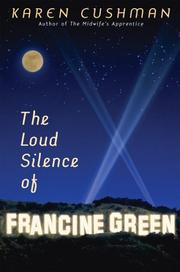
The loud silence of Francine Green
Karen Cushman
On the fringe
Donald R. Gallo
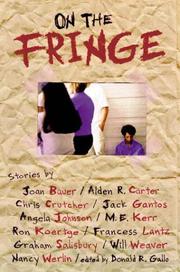
On the fringe
Donald R. Gallo
The classroom
Robin Mellom
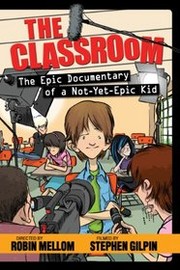
The classroom
Robin Mellom
Details
Book Length
- ISBN
- 9780545829960
- Pages
- 212
- Publisher
- Scholastic Press
- Published
- 2016
- Type
- Fiction