
Reviewed by HootRated editorial · Last updated
The Little Rock School Desegregation Crisis in American History (In American History)
Robert Somerlott

The Little Rock School Desegregation Crisis in American History (In American History)
Age Rating, Reading Level & Content Guide
by Robert Somerlott
The text is written at an 8th grade reading level, the subject matter is intended for older middle graders (ages 11+), and the content has moderate intensity with some emotionally heavy themes. Its HootRating code, MS, means moderate content, mostly social.
We may earn a commission from these links.
About This Book
Discover the powerful story behind the 1957 struggle to integrate Little Rock's schools, where courage and determination challenged segregation. Meet the brave students and leaders who stood up for equality and changed history in Arkansas. This journey highlights a pivotal moment in America's fight for civil rights.
Themes
Quick Assessment
This is a Level 8-9 book with moderate content intensity. Content themes include racial discrimination, historical, social justice. Written for readers ages 11+.
Why we rated The Little Rock School Desegregation Crisis in American History (In American History) MS (Moderate)
The Little Rock School Desegregation Crisis in American History (In American History) is written at a Level 8-9 reading level across 128 pages (approximately 16,186 words). Middle Grades Plus (Ages 11+) is the typical interest range for this book — readers in that age band have the maturity and attention span suited to the story, separate from whether they can decode the words.
Read aloud, The Little Rock School Desegregation Crisis in American History (In American History) runs about 1.8 hours — long enough to span several bedtime sessions.
We rate The Little Rock School Desegregation Crisis in American History (In American History) as MS (Moderate, mostly social) because the content sits in the "Moderate" range — moderate conflict that may involve loss, scary scenes, or interpersonal stakes. The strongest signals come from social complexity — these are the dimensions parents should evaluate against their reader's tolerance.
Specific content flags noted by reviewers: Racial Discrimination, Historical, Social Justice.
Thematically, The Little Rock School Desegregation Crisis in American History (In American History) explores history, civil rights, social justice, family, and coming of age — these threads give the book room to mean different things to different readers. Each of these themes is concrete enough to seed a real conversation, not just a moral lesson.
Good fit for
- ✓ Children in the Ages 11+ range — the maturity and attention span match the story's pacing.
- ✓ Reluctant readers who need fast-paced, hook-heavy stories to stay engaged.
- ✓ Readers ready to talk through themes after they finish — there's enough substance for a meaningful conversation.
- ✓ Kids drawn to stories about history, civil rights, social justice.
- ✓ Readers who fall hard for one book and want a long series to live in — there are 10 more books in the In American History series.
- ✓ Curious kids who prefer real-world topics over made-up stories.
Maybe not for
- ! Readers who get easily upset by emotional or moderately dark scenes — the conflict here is real, not just background flavor.
For Parents
Content Intensity
MS · Moderate · SocialReading the HootRating code: the first letter is the content intensity (C = Gentle · L = Mild · M = Moderate · I = Intense · V = Very Intense); the second, when there is one, is the kind of content that drives it (E = Emotional · P = Physical · S = Social · T = Thematic). Reading level and age range are rated separately. How we rate
Real stakes and emotional weight. May include sustained danger, loss, or bullying.
Content Flags
Was our "Moderate" content intensity rating accurate for this book?
Reading Insights
Hook Factor
7/10High engagement — fast-paced, fun, and hard to put down. Great for reluctant readers.
Discussion Potential
6/10Good conversation starter with themes worth exploring together.
Book DNA
Multi-dimensional content fingerprint
More in the In American History Series
The Salem witchcraft trials in American history
David K. Fremon

The Salem witchcraft trials in American history
David K. Fremon
The Alaska Purchase in American history
David K. Fremon
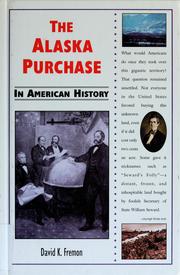
The Alaska Purchase in American history
David K. Fremon
The Boston Tea Party in American history
Mary Hull
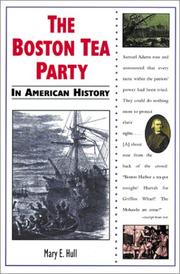
The Boston Tea Party in American history
Mary Hull
The Jim Crow Laws and Racism in American History
David K. Fremon
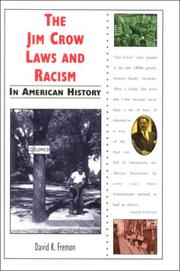
The Jim Crow Laws and Racism in American History
David K. Fremon
The Union and the Civil War in American history
Mary Hull
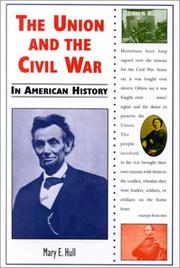
The Union and the Civil War in American history
Mary Hull
Shays' Rebellion and the Constitution in American history
Mary Hull
Shays' Rebellion and the Constitution in American history
Mary Hull
The dust bowl and the Depression in American history
Debra McArthur
The dust bowl and the Depression in American history
Debra McArthur
Japanese-American internment in American history
David K. Fremon
Japanese-American internment in American history
David K. Fremon
If your child liked this book, they might like these
Matched on content and themes — all rated for reading level and content intensity.
The Little Rock Nine
Jake Miller
The Little Rock Nine
Jake Miller
Civil rights, the long struggle
Eileen Lucas
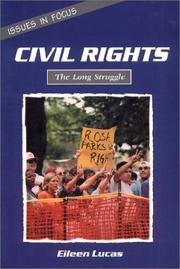
Civil rights, the long struggle
Eileen Lucas
Child of the civil rights movement
Paula Young Shelton

Child of the civil rights movement
Paula Young Shelton
Martin Luther King, Jr.
John F. Wukovits
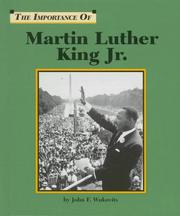
Martin Luther King, Jr.
John F. Wukovits
The civil rights movement
Tamra Orr
The civil rights movement
Tamra Orr
The Civil Rights Movement Revisited
Patrick B. Miller, Therese Frey Steffen, Elisabeth Schäfer-Wünsche
The Civil Rights Movement Revisited
Patrick B. Miller, Therese Frey Steffen, Elisabeth Schäfer-Wünsche
What Is the Civil Rights Movement?
Sherri L. Smith

What Is the Civil Rights Movement?
Sherri L. Smith
Brown v. Board of Education
Susan Goldman Rubin
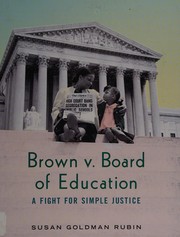
Brown v. Board of Education
Susan Goldman Rubin
Details
Book Length
- ISBN
- 0766012980
- Pages
- 128
- Publisher
- Enslow Publishing
- Published
- August 2001
- Type
- Nonfiction
- Word Count
- 16,186
- Read-Aloud
- ~1h 48m
- Text Density
- Light Text