The Little Book of Exploration Life Cycles How Living Things Grow and Change
North Carolina Museum of Life and Science

The Little Book of Exploration Life Cycles How Living Things Grow and Change
Age Rating, Reading Level & Content Guide
How Living Things Grow and Change
by North Carolina Museum of Life and Science
The text is written at a 2nd grade reading level, the subject matter is intended for younger children (ages 5–8), and the content is gentle with no concerning themes.
We may earn a commission from these links. Bookshop.org supports independent bookstores with every purchase.
About This Book
What if you could peek inside a tiny seed and watch it grow into a big, beautiful plant? Imagine following the amazing journey of animals and plants as they change and grow right before your eyes. There's so much to discover—what will happen next in the life cycle?
Themes
Quick Assessment
This book introduces young readers to the life cycles of plants and animals in a simple, engaging way suitable for early readers aged 5 to 8. It answers common questions about growth and change, providing clear explanations that support curiosity about nature. The content is gentle and educational, making it a great resource for early science learning.
Why we rated The Little Book of Exploration Life Cycles How Living Things Grow and Change 7C
The Little Book of Exploration Life Cycles How Living Things Grow and Change is written at a Level 2 reading level across 32 pages. Strong independent readers around grade 3.0 can typically handle this book on their own; with parent or teacher support, The Little Book of Exploration Life Cycles How Living Things Grow and Change works for readers up to grade 4.0.
We rate The Little Book of Exploration Life Cycles How Living Things Grow and Change as 7C ("Clear") because the content sits in the "Gentle" range — no conflict beyond everyday childhood experiences. Across our four dimensions (emotional, physical, social, thematic) the book reads as evenly gentle; no single dimension stands out as a concern.
No specific content flags were raised by community reviewers, which is consistent with the gentle intensity score.
Thematically, The Little Book of Exploration Life Cycles How Living Things Grow and Change explores science & nature, education, and growth & change — these threads give the book room to mean different things to different readers.
Good fit for
- ✓ Children in the Ages 5-8 range — the maturity and attention span match the story's pacing.
- ✓ Patient readers who enjoy slower, character-driven stories.
- ✓ Kids drawn to stories about science & nature, education, growth & change.
Maybe not for
- ! Reluctant readers who need a fast hook — the pacing here rewards patience.
For Parents
Content Intensity
7C — ClearNo conflict beyond everyday childhood experiences. Safe for sensitive readers.
Was our "Gentle" content intensity rating accurate for this book?
Reading Insights
Hook Factor
1/10A steady, thoughtful read that rewards patient readers.
Discussion Potential
1/10A lighter read — great for independent enjoyment.
Book DNA
Multi-dimensional content fingerprint
Similar Books
Based on content and theme analysis
Life Cycle of Plants
Benchmark Education Company LLC Staff
Life Cycle of Plants
Benchmark Education Company LLC Staff
Life Cycles
Lisa Trumbauer

Life Cycles
Lisa Trumbauer
Plants Life Cycle
Gail Saunders-Smith
Plants Life Cycle
Gail Saunders-Smith
Life cycles
Richard Spilsbury

Life cycles
Richard Spilsbury
Life Cycles
Donna Schaffer

Life Cycles
Donna Schaffer
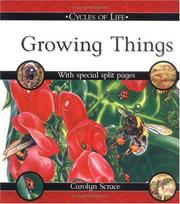
Growing Things (Cycles of Life)
Carolyn Franklin Scrace
Growing Things (Cycles of Life)
Carolyn Franklin Scrace
Details
Book Length
- ISBN
- 9780590261401
- Pages
- 32
- Publisher
- Scholastic
- Published
- 1993
- Type
- Fiction