Reviewed by HootRated editorial · Last updated
The invisible rules of the Zoë Lama
Tish Cohen
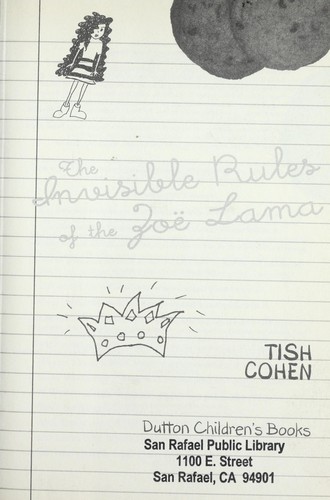
The invisible rules of the Zoë Lama
Age Rating, Reading Level & Content Guide
by Tish Cohen
The text is written at a 4th grade reading level, the subject matter is intended for middle graders (ages 9–12), and the content is mild with minimal sensitive material. Its HootRating code, LE, means mild content, mostly emotional.
We may earn a commission from these links.
About This Book
What if you discovered there were invisible rules everyone around you seemed to know — but you didn’t? Zoë Lama is just trying to figure out how to be herself and navigate the tricky world of family and friendships. But when those invisible rules start causing trouble, will Zoë find a way to break free and make her own path?
Themes
Quick Assessment
The Invisible Rules of the Zoë Lama is a humorous middle-grade novel about a girl learning to understand family dynamics and social expectations. Suitable for ages 9-12, it explores themes of identity and growing up with lighthearted storytelling. Parents should know this book deals with common childhood challenges and the journey toward self-discovery without intense or troubling content.
Why we rated The invisible rules of the Zoë Lama LE (Mild)
The invisible rules of the Zoë Lama is written at a Level 4-5 reading level across 247 pages. Reading-wise, most kids in grade 6 and up can manage The invisible rules of the Zoë Lama on their own; younger readers can enjoy it with a parent or teacher reading along.
We rate The invisible rules of the Zoë Lama as LE (Mild, mostly emotional) because the content sits in the "Mild" range — mild conflict — the kind a child encounters in normal play and sibling life. Across our four dimensions (emotional, physical, social, thematic) the book reads as evenly mild; no single dimension stands out as a concern.
No specific content flags were raised by community reviewers, which is consistent with the mild intensity score.
Thematically, The invisible rules of the Zoë Lama explores family, girls & women, humor, and coming of age — these threads give the book room to mean different things to different readers.
Good fit for
- ✓ Children in the Ages 9-12 range — the maturity and attention span match the story's pacing.
- ✓ Kids drawn to stories about family, girls & women, humor.
Maybe not for
- ! Readers looking for something heavier — this is a gentle, low-stakes story by design.
For Parents
Content Intensity
LE · Mild · EmotionalReading the HootRating code: the first letter is the content intensity (C = Gentle · L = Mild · M = Moderate · I = Intense · V = Very Intense); the second, when there is one, is the kind of content that drives it (E = Emotional · P = Physical · S = Social · T = Thematic). Reading level and age range are rated separately. How we rate
Light conflict or tension. Mild peril resolved quickly.
Was our "Mild" content intensity rating accurate for this book?
Reading Insights
Discussion Potential
3/10A lighter read — great for independent enjoyment.
Book DNA
Multi-dimensional content fingerprint
If your child liked this book, they might like these
Matched on content and themes — all rated for reading level and content intensity.
The One and Only Zoe Lama
Tish Cohen
The One and Only Zoe Lama
Tish Cohen
A Crooked Kind of Perfect
Linda Urban
A Crooked Kind of Perfect
Linda Urban
The secrets to ruling school (without even trying)
Neil Swaab

The secrets to ruling school (without even trying)
Neil Swaab
The secret hum of a daisy
Tracy Holczer

The secret hum of a daisy
Tracy Holczer
Karma bites
Stacy Kramer

Karma bites
Stacy Kramer
Best kept secret
Ann M. Martin

Best kept secret
Ann M. Martin
Rules for secret keeping
Lauren Barnholdt

Rules for secret keeping
Lauren Barnholdt
Zebra forest
Adina Gewirtz

Zebra forest
Adina Gewirtz
Details
Book Length
- ISBN
- 9780525478102
- Pages
- 247
- Publisher
- Dutton Juvenile
- Published
- 2007
- Type
- Fiction