
Survive at School
Henderson, Peter Eldin
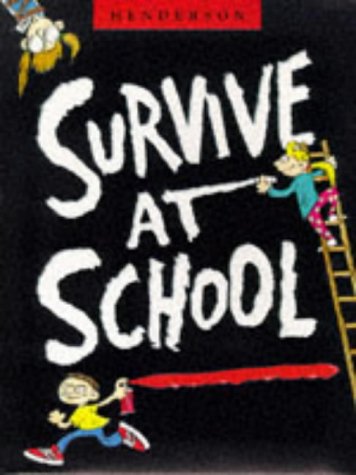
Survive at School
Age Rating, Reading Level & Content Guide
by Henderson, Peter Eldin
The text is written at a 2nd grade reading level, the subject matter is intended for younger children (ages 5–8), and the content is gentle with no concerning themes.
We may earn a commission from these links. Bookshop.org supports independent bookstores with every purchase.
About This Book
School can feel like a big battlefield where boys and girls sometimes seem like they're from different planets. This book gives you clever tricks to handle tricky moments with classmates and turn tough days into great ones. Understanding these secrets will make school a place where you feel strong and ready for anything.
Themes
Quick Assessment
Survive at School is a fictional handbook aimed at early readers aged 5 to 8, offering practical advice on navigating social interactions between boys and girls during school. It addresses common childhood challenges in a lighthearted way appropriate for young children, helping them build confidence and social skills. The content is gentle, with no mature themes, making it suitable for early elementary readers.
Why we rated Survive at School 7C
Survive at School is written at a Level 2 reading level across 16 pages. Strong independent readers around grade 3.0 can typically handle this book on their own; with parent or teacher support, Survive at School works for readers up to grade 4.0.
We rate Survive at School as 7C ("Clear") because the content sits in the "Gentle" range — no conflict beyond everyday childhood experiences. Across our four dimensions (emotional, physical, social, thematic) the book reads as evenly gentle; no single dimension stands out as a concern.
No specific content flags were raised by community reviewers, which is consistent with the gentle intensity score.
Thematically, Survive at School explores friendship, school life, social skills, and family — these threads give the book room to mean different things to different readers.
Good fit for
- ✓ Children in the Ages 5-8 range — the maturity and attention span match the story's pacing.
- ✓ Patient readers who enjoy slower, character-driven stories.
- ✓ Kids drawn to stories about friendship, school life, social skills.
Maybe not for
- ! Reluctant readers who need a fast hook — the pacing here rewards patience.
For Parents
Content Intensity
7C — ClearNo conflict beyond everyday childhood experiences. Safe for sensitive readers.
Was our "Gentle" content intensity rating accurate for this book?
Reading Insights
Hook Factor
1/10A steady, thoughtful read that rewards patient readers.
Discussion Potential
1/10A lighter read — great for independent enjoyment.
Book DNA
Multi-dimensional content fingerprint
Similar Books
Based on content and theme analysis
How to Survive High School
Terry Dunnahoo
How to Survive High School
Terry Dunnahoo
The survival guide for school success
Ron Shumsky

The survival guide for school success
Ron Shumsky
Survival Guide for Kids with Behavior Challenges
Thomas Ph D. McIntyre

Survival Guide for Kids with Behavior Challenges
Thomas Ph D. McIntyre
Been There, Survived That
Karen Macklin
Been There, Survived That
Karen Macklin
Survival Guide for Students
Globe Fearon, Globe Fearon Educational Publishing, Pearson Education Canada

Survival Guide for Students
Globe Fearon, Globe Fearon Educational Publishing, Pearson Education Canada
How to Survive High School--with Minimal Brain Damage
Doug Lansky, Aaron Dorfman

How to Survive High School--with Minimal Brain Damage
Doug Lansky, Aaron Dorfman
Details
Book Length
- ISBN
- 9781855978331
- Pages
- 16
- Publisher
- Penguin Books, Limited (UK)
- Published
- 1996-05
- Type
- Fiction