
Reviewed by HootRated editorial · Last updated
Plain Tales from the Hills
Rudyard Kipling

The text is written at a 6th grade reading level, the subject matter is intended for teens (ages 13+), and the content has moderate intensity with some emotionally heavy themes. Its HootRating code, ME, means moderate content, mostly emotional.
We may earn a commission from these links.
About This Book
What if a girl born in the hills, caught between two worlds, had to choose who she really was? Imagine Lispeth, a strikingly beautiful girl with a mysterious past, navigating life where old traditions meet new beliefs. What secrets will her journey reveal about courage and identity?
Themes
Quick Assessment
Lispeth, a young woman raised by missionaries in the northern hills of colonial India, is pulled between the Hill community she was born into and the household that raised her. The story touches on religious conversion, social expectations, and the death of her parents in a cholera outbreak, all handled briefly and without graphic detail. Parents may want to talk through the colonial-era attitudes toward local people that appear in the text, since the book is most rewarding with some historical context.
Why we rated Plain Tales from the Hills ME (Moderate)
Plain Tales from the Hills is written at a Level 6 reading level across 310 pages. Upper Grades (Ages 13+) is the typical interest range for this book — readers in that age band have the maturity and attention span suited to the story, separate from whether they can decode the words.
We rate Plain Tales from the Hills as ME (Moderate, mostly emotional) because the content sits in the "Moderate" range — moderate conflict that may involve loss, scary scenes, or interpersonal stakes. The strongest signals come from emotional weight — these are the dimensions parents should evaluate against their reader's tolerance.
Specific content flags noted by reviewers: Cultural Conflict, Identity & Self-Discovery, Loss & Grief.
Thematically, Plain Tales from the Hills explores historical, cultural identity, coming of age, family, and literary fiction — these threads give the book room to mean different things to different readers. Each of these themes is concrete enough to seed a real conversation, not just a moral lesson.
Good fit for
- ✓ Children in the Ages 13+ range — the maturity and attention span match the story's pacing.
- ✓ Family book clubs, classroom read-alouds, and parents who want a strong conversation hook.
- ✓ Kids drawn to stories about historical, cultural identity, coming of age.
Maybe not for
- ! Readers who get easily upset by emotional or moderately dark scenes — the conflict here is real, not just background flavor.
- ! Children currently coping with grief — the themes may hit close to home.
For Parents
Content Intensity
ME · Moderate · EmotionalReading the HootRating code: the first letter is the content intensity (C = Gentle · L = Mild · M = Moderate · I = Intense · V = Very Intense); the second, when there is one, is the kind of content that drives it (E = Emotional · P = Physical · S = Social · T = Thematic). Reading level and age range are rated separately. How we rate
Real stakes and emotional weight. May include sustained danger, loss, or bullying.
Content Flags
Was our "Moderate" content intensity rating accurate for this book?
Reading Insights
Discussion Potential
7/10Rich themes that spark meaningful family conversation. Great for book clubs and read-alouds.
Book DNA
Multi-dimensional content fingerprint
If your child liked this book, they might like these
Matched on content and themes — all rated for reading level and content intensity.
Wuthering Heights
Emma Carroll
Wuthering Heights
Emma Carroll
To Kill a Mockingbird
Harper Lee

To Kill a Mockingbird
Harper Lee
The Scarlet Letter
Nathaniel Hawthorne
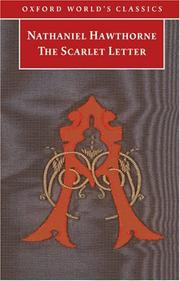
The Scarlet Letter
Nathaniel Hawthorne
The hobbit
J.R.R. Tolkien
The hobbit
J.R.R. Tolkien
Soldier boy
Keely Hutton

Soldier boy
Keely Hutton
Hattie Big Sky
Kirby Larson
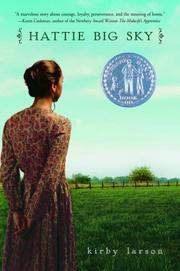
Hattie Big Sky
Kirby Larson
Stones For My Father
Trilby Kent
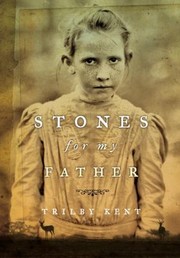
Stones For My Father
Trilby Kent
The accidental highwayman
Ben Tripp

The accidental highwayman
Ben Tripp
Details
Book Length
- ISBN
- 9781853260544
- Pages
- 310
- Publisher
- Brand: Wordsworth Editions Ltd
- Published
- Dec 01, 1999
- Type
- Fiction