Reviewed by HootRated editorial · Last updated
Leaving Barrumbi
Leonie Norrington
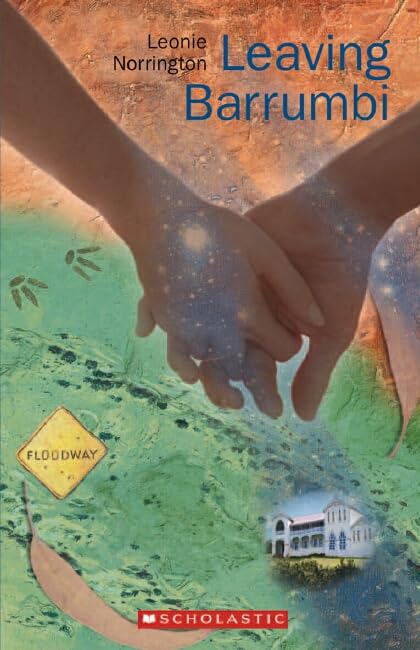
Leaving Barrumbi
Age Rating, Reading Level & Content Guide
by Leonie Norrington
The text is written at a 6th grade reading level, the subject matter is intended for middle graders (ages 9–12), and the content has moderate intensity with some emotionally heavy themes. Its HootRating code, ME, means moderate content, mostly emotional.
We may earn a commission from these links.
About This Book
Dale Murphy is about to face the biggest change of his life — leaving his home at Long Hole and heading to a new school far away. Born and raised in a tight-knit Aboriginal community, Dale suddenly feels like an outsider in a world that sees him only as a 'whitefella.' What happens when the place you belong to feels like it's slipping away?
Quick Assessment
Leaving Barrumbi explores the challenges of identity and belonging through the eyes of Dale, a boy uprooted from his Aboriginal community to attend a distant boarding school. Suitable for ages 9-12, the book sensitively addresses themes of cultural difference, friendship, and self-discovery without graphic content, making it appropriate for middle-grade readers.
Why we rated Leaving Barrumbi ME (Moderate)
Leaving Barrumbi is written at a Level 6 reading level across 269 pages. Reading-wise, most kids in grade 7 and up can manage Leaving Barrumbi on their own; younger readers can enjoy it with a parent or teacher reading along.
We rate Leaving Barrumbi as ME (Moderate, mostly emotional) because the content sits in the "Moderate" range — moderate conflict that may involve loss, scary scenes, or interpersonal stakes. The strongest signals come from emotional weight — these are the dimensions parents should evaluate against their reader's tolerance.
No specific content flags were raised by community reviewers, which is consistent with the moderate intensity score.
Thematically, Leaving Barrumbi explores multicultural, friendship, coming of age, and family — these threads give the book room to mean different things to different readers. Each of these themes is concrete enough to seed a real conversation, not just a moral lesson.
Good fit for
- ✓ Children in the Ages 9-12 range — the maturity and attention span match the story's pacing.
- ✓ Readers ready to talk through themes after they finish — there's enough substance for a meaningful conversation.
- ✓ Kids drawn to stories about multicultural, friendship, coming of age.
- ✓ Readers (and parents) who care about award-recognized writing — Leaving Barrumbi carries an award.
Maybe not for
- ! Readers who get easily upset by emotional or moderately dark scenes — the conflict here is real, not just background flavor.
For Parents
Content Intensity
ME · Moderate · EmotionalReading the HootRating code: the first letter is the content intensity (C = Gentle · L = Mild · M = Moderate · I = Intense · V = Very Intense); the second, when there is one, is the kind of content that drives it (E = Emotional · P = Physical · S = Social · T = Thematic). Reading level and age range are rated separately. How we rate
Real stakes and emotional weight. May include sustained danger, loss, or bullying.
Was our "Moderate" content intensity rating accurate for this book?
Reading Insights
Discussion Potential
5/10Good conversation starter with themes worth exploring together.
Book DNA
Multi-dimensional content fingerprint
If your child liked this book, they might like these
Matched on content and themes — all rated for reading level and content intensity.
Changeover
Margaret Mahy

Changeover
Margaret Mahy
Bridge of triangles
John Muk Muk Burke

Bridge of triangles
John Muk Muk Burke
Goodbye stranger
Rebecca Stead

Goodbye stranger
Rebecca Stead
Inherited Family
Robert B. Fox

Inherited Family
Robert B. Fox
The Bone Sparrow
Zana Fraillon

The Bone Sparrow
Zana Fraillon
Getting somewhere
Jenny Pausacker

Getting somewhere
Jenny Pausacker
Good-bye to the trees
Vicky Shiefman

Good-bye to the trees
Vicky Shiefman
Amil and the After
Veera Hiranandani

Amil and the After
Veera Hiranandani
Details
Book Length
- ISBN
- 9781862916272
- Pages
- 269
- Publisher
- Omnibus Books
- Published
- 2007
- Type
- Fiction