How to debate
Dunbar, Robert E.

How to debate
Age Rating, Reading Level & Content Guide
by Dunbar, Robert E.
Speak Out, Write On!
The text is written at a 10th grade reading level, the subject matter is intended for teens and adults (ages 16+), and the content is gentle with no concerning themes.
We may earn a commission from these links. Bookshop.org supports independent bookstores with every purchase.
About This Book
Discover the essential skills to become a confident debater by learning how to research topics, gather strong evidence, challenge opposing views, and deliver persuasive arguments with impact. Perfect for young adults ready to sharpen their critical thinking and public speaking abilities.
Themes
Quick Assessment
This is a Level 10 book with gentle content intensity. It's a Sweet Spot read — challenging text with gentle themes, ideal for advanced or 2e readers. No notable content concerns flagged. Written for readers ages 16+.
Why we rated How to debate 14C
How to debate is written at a Level 10 reading level across 128 pages (approximately 21,651 words). Strong independent readers around grade 11.0 can typically handle this book on their own; with parent or teacher support, How to debate works for readers up to grade 12.0.
Read aloud, How to debate runs about 2.4 hours — long enough to span several bedtime sessions.
We rate How to debate as 14C ("Clear") because the content sits in the "Gentle" range — no conflict beyond everyday childhood experiences. Across our four dimensions (emotional, physical, social, thematic) the book reads as evenly gentle; no single dimension stands out as a concern.
No specific content flags were raised by community reviewers, which is consistent with the gentle intensity score.
Thematically, How to debate explores education, public speaking, and critical thinking — these threads give the book room to mean different things to different readers.
Good fit for
- ✓ Children in the Ages 16+ range — the maturity and attention span match the story's pacing.
- ✓ Readers who like a steady plot with enough momentum to keep pages turning.
- ✓ Kids drawn to stories about education, public speaking, critical thinking.
- ✓ Curious kids who prefer real-world topics over made-up stories.
Maybe not for
- ! Readers whose emotional readiness lags behind their decoding skills — this book's intensity outruns its reading level, a classic "gifted kid" mismatch.
For Parents
Content Intensity
14C — ClearNo conflict beyond everyday childhood experiences. Safe for sensitive readers.
Was our "Gentle" content intensity rating accurate for this book?
Reading Insights
Hook Factor
5/10Engaging read with solid pacing and interesting themes.
Discussion Potential
1/10A lighter read — great for independent enjoyment.
Book DNA
Multi-dimensional content fingerprint
Similar Books
Based on content and theme analysis
Australian Schoolkids' Guide to Debating and Public Speaking
Claire Duffy
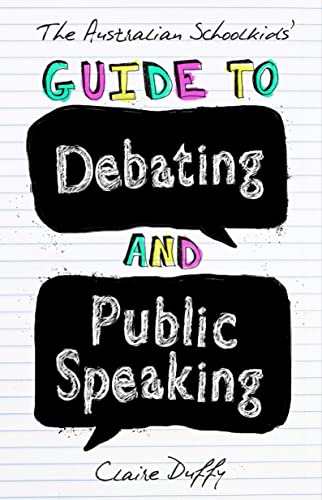
Australian Schoolkids' Guide to Debating and Public Speaking
Claire Duffy
Strategic debate
Roy V. Wood

Strategic debate
Roy V. Wood
Lincoln-douglas Debate (The National Forensic League Library of Public Speaking and Debate)
Cynthia Woodhouse
Lincoln-douglas Debate (The National Forensic League Library of Public Speaking and Debate)
Cynthia Woodhouse
Dialogue, discussion, and debate.
Henrietta List

Dialogue, discussion, and debate.
Henrietta List
Persuasive Speaking (The National Forensic League Library of Public Speaking and Debate)
Dixie Waldo
Persuasive Speaking (The National Forensic League Library of Public Speaking and Debate)
Dixie Waldo
Open for Debate 2 (Open for Debate)
Benchmark Books

Open for Debate 2 (Open for Debate)
Benchmark Books
Details
Book Length
- ISBN
- 0531111229
- Pages
- 128
- Publisher
- Franklin Watts
- Published
- 1994
- Type
- Nonfiction
- Word Count
- 21,651
- Read-Aloud
- ~2h 24m
- Text Density
- Standard