Getting Better
Cyndi Alder
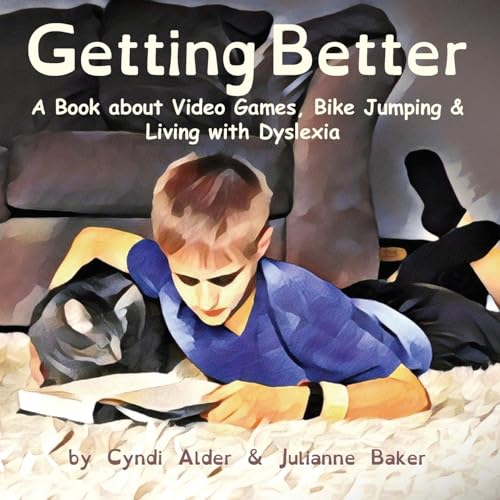
Getting Better
Age Rating, Reading Level & Content Guide
A Book about Video Games, Bike Jumping & Living with Dyslexia
by Cyndi Alder
The text is written at a 2nd grade reading level, the subject matter is intended for younger children (ages 5–8), and the content is mild with minimal sensitive material.
We may earn a commission from these links. Bookshop.org supports independent bookstores with every purchase.
About This Book
The scratch of bike tires on gravel and the soft purr of Mr. Meatball fill the warm summer air. Jake feels the excitement and nerves of starting a new school, where books seem tricky and letters jumble on the page. But when Jake finds out his favorite cousin shares his secret challenge, everything starts to feel a little easier—and a lot more hopeful.
Quick Assessment
Getting Better follows Jake, a young boy with dyslexia who moves to a new neighborhood and faces the challenges of a new school. This early reader offers supportive themes about persistence, self-acceptance, and family, with dyslexia-sensitive formatting to assist young readers. It includes a helpful resource section for caregivers seeking to understand and support children with dyslexia, making it appropriate for ages 5-8.
Why we rated Getting Better 7LE
Getting Better is written at a Level 2 reading level across 32 pages. Strong independent readers around grade 3.0 can typically handle this book on their own; with parent or teacher support, Getting Better works for readers up to grade 4.0.
We rate Getting Better as 7LE ("Light — Emotional") because the content sits in the "Mild" range — mild conflict — the kind a child encounters in normal play and sibling life. Across our four dimensions (emotional, physical, social, thematic) the book reads as evenly mild; no single dimension stands out as a concern.
No specific content flags were raised by community reviewers, which is consistent with the mild intensity score.
Thematically, Getting Better explores disability representation, family, coming of age, and friendship — these threads give the book room to mean different things to different readers.
Good fit for
- ✓ Children in the Ages 5-8 range — the maturity and attention span match the story's pacing.
- ✓ Patient readers who enjoy slower, character-driven stories.
- ✓ Kids drawn to stories about disability representation, family, coming of age.
Maybe not for
- ! Reluctant readers who need a fast hook — the pacing here rewards patience.
For Parents
Content Intensity
7LE — Light — EmotionalLight conflict or tension. Mild peril resolved quickly.
Was our "Mild" content intensity rating accurate for this book?
Reading Insights
Hook Factor
1/10A steady, thoughtful read that rewards patient readers.
Discussion Potential
3/10A lighter read — great for independent enjoyment.
Book DNA
Multi-dimensional content fingerprint
Similar Books
Based on content and theme analysis
All Better (Road to Reading Mile 1: Getting Started)
Lisa Thiesing
All Better (Road to Reading Mile 1: Getting Started)
Lisa Thiesing
It Can Get Better
Paul Dickinson

It Can Get Better
Paul Dickinson
Getting Better
Gill Tanner

Getting Better
Gill Tanner
Just Jake
Jake Marcionette

Just Jake
Jake Marcionette
Feeling Better
Rachel Rashkin
Feeling Better
Rachel Rashkin
All Better
Leigh Attaway Wilcox
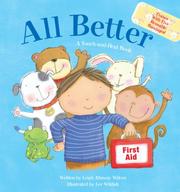
All Better
Leigh Attaway Wilcox
Details
Book Length
- ISBN
- 9780991104673
- Pages
- 32
- Publisher
- Watertree Press LLC
- Published
- 2024
- Type
- Fiction