
Getting ahead of ADHD
Joel T. Nigg

Getting ahead of ADHD
Age Rating, Reading Level & Content Guide
What Next-Generation Science Says about Treatments That Work?and How You Can Make Them Work for Your Child
by Joel T. Nigg
The text is written at a 6th grade reading level, the subject matter is intended for middle graders (ages 9–12), and the content is mild with minimal sensitive material.
We may earn a commission from these links. Bookshop.org supports independent bookstores with every purchase.
About This Book
ADHD isn't just about being hyper or distracted—it's actually connected to the world around you in ways you might never guess. Discover how things like what you eat, how much you move, and even the air you breathe can change how your brain works. These surprising secrets could help you take charge and feel your best every day.
Themes
Quick Assessment
This middle-grade book offers a science-backed exploration of ADHD, focusing on how genetics and environment interact to influence children's attention and behavior. It provides clear, practical advice on nutrition, exercise, sleep, and stress management, distinguishing credible treatments from unproven or risky ones. Suitable for ages 9-12, it helps parents and children understand and support ADHD through positive lifestyle changes.
Why we rated Getting ahead of ADHD 11LE
Getting ahead of ADHD is written at a Level 6 reading level across 299 pages. Strong independent readers around grade 7.0 can typically handle this book on their own; with parent or teacher support, Getting ahead of ADHD works for readers up to grade 8.0.
We rate Getting ahead of ADHD as 11LE ("Light — Emotional") because the content sits in the "Mild" range — mild conflict — the kind a child encounters in normal play and sibling life. Across our four dimensions (emotional, physical, social, thematic) the book reads as evenly mild; no single dimension stands out as a concern.
No specific content flags were raised by community reviewers, which is consistent with the mild intensity score.
Thematically, Getting ahead of ADHD explores neurodivergent characters, family, science & nature, and health & wellness — these threads give the book room to mean different things to different readers.
Good fit for
- ✓ Children in the Ages 9-12 range — the maturity and attention span match the story's pacing.
- ✓ Patient readers who enjoy slower, character-driven stories.
- ✓ Kids drawn to stories about neurodivergent characters, family, science & nature.
- ✓ Curious kids who prefer real-world topics over made-up stories.
Maybe not for
- ! Reluctant readers who need a fast hook — the pacing here rewards patience.
For Parents
Content Intensity
11LE — Light — EmotionalLight conflict or tension. Mild peril resolved quickly.
Was our "Mild" content intensity rating accurate for this book?
Reading Insights
Hook Factor
1/10A steady, thoughtful read that rewards patient readers.
Discussion Potential
2/10A lighter read — great for independent enjoyment.
Book DNA
Multi-dimensional content fingerprint
Similar Books
Based on content and theme analysis
All about ADHD
Linda Jo Pfiffner
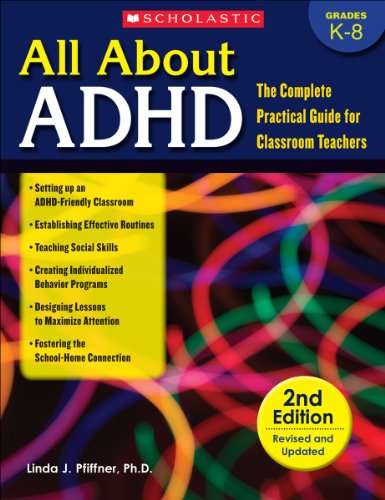
All about ADHD
Linda Jo Pfiffner
Adhd
Russell Thompson
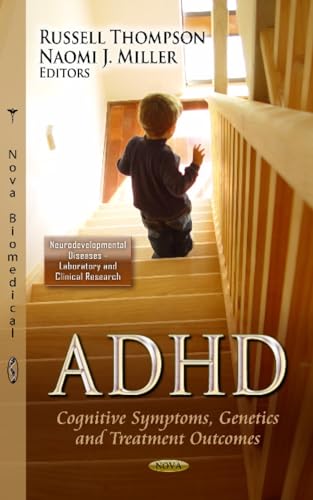
Adhd
Russell Thompson
Attention Deficit Hyperactivity Disorder
Gregory S. Greenberg, Wade F. Horn
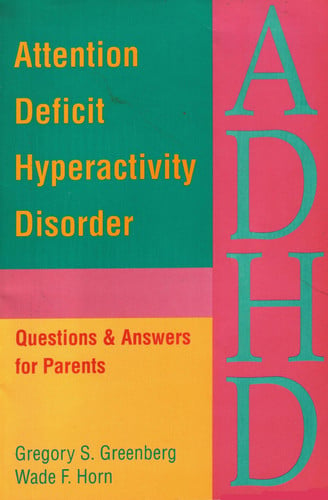
Attention Deficit Hyperactivity Disorder
Gregory S. Greenberg, Wade F. Horn
ADHD
Julian Stuart Haber
ADHD
Julian Stuart Haber
Handling ADHD
Carol Hand

Handling ADHD
Carol Hand
Attention deficit/hyperactivity disorder
William Dudley
Attention deficit/hyperactivity disorder
William Dudley
Details
Book Length
- ISBN
- 9781462524938
- Pages
- 299
- Publisher
- Guilford Publications
- Published
- 2017
- Type
- Nonfiction