Reviewed by HootRated editorial · Last updated
Early Humans
Roy A. Gallant

Early Humans
Age Rating, Reading Level & Content Guide
by Roy A. Gallant
Story of Science (Marshall Cavendish)
The text is written at a 7th grade reading level, the subject matter is intended for older middle graders (ages 11+), and the content is gentle with no concerning themes. Its HootRating code, C, means gentle content.
We may earn a commission from these links. Bookshop.org supports independent bookstores with every purchase.
About This Book
Journey back in time to explore the fascinating origins of humanity, from ancient apelike ancestors to early humans like Neanderthals and Homo erectus. Discover the clues fossils provide about our evolution and how scientists piece together our distant past. This adventure uncovers the story of where we come from and what makes us human.
Themes
Quick Assessment
This is a Level 7-8 book with gentle content intensity. It's a Sweet Spot read — challenging text with gentle themes, ideal for advanced or 2e readers. No notable content concerns flagged. Written for readers ages 11+.
Why we rated Early Humans C (Gentle)
Early Humans is written at a Level 7-8 reading level across 80 pages (approximately 11,207 words). Middle Grades Plus (Ages 11+) is the typical interest range for this book — readers in that age band have the maturity and attention span suited to the story, separate from whether they can decode the words.
Read aloud, Early Humans runs about 1.3 hours — long enough to span several bedtime sessions.
We rate Early Humans as C (Gentle) because the content sits in the "Gentle" range — no conflict beyond everyday childhood experiences. Across our four dimensions (emotional, physical, social, thematic) the book reads as evenly gentle; no single dimension stands out as a concern.
No specific content flags were raised by community reviewers, which is consistent with the gentle intensity score.
Thematically, Early Humans explores science & nature, history, and adventure — these threads give the book room to mean different things to different readers.
Good fit for
- ✓ Children in the Ages 11+ range — the maturity and attention span match the story's pacing.
- ✓ Reluctant readers who need fast-paced, hook-heavy stories to stay engaged.
- ✓ Kids drawn to stories about science & nature, history, adventure.
- ✓ Curious kids who prefer real-world topics over made-up stories.
Maybe not for
- ! Readers looking for something heavier — this is a gentle, low-stakes story by design.
For Parents
Content Intensity
C · GentleReading the HootRating code: the first letter is the content intensity (C = Gentle · L = Mild · M = Moderate · I = Intense · V = Very Intense); the second, when there is one, is the kind of content that drives it (E = Emotional · P = Physical · S = Social · T = Thematic). Reading level and age range are rated separately. How we rate
No conflict beyond everyday childhood experiences. Safe for sensitive readers.
Was our "Gentle" content intensity rating accurate for this book?
Reading Insights
Hook Factor
7/10High engagement — fast-paced, fun, and hard to put down. Great for reluctant readers.
Discussion Potential
1/10A lighter read — great for independent enjoyment.
Book DNA
Multi-dimensional content fingerprint
If your child liked this book, they might like these
Matched on content and themes — all rated for reading level and content intensity.
The Science of Prehistoric Giants
Ian Graham

The Science of Prehistoric Giants
Ian Graham
Paleontology the study of prehistoric life
Susan Heinrichs Gray

Paleontology the study of prehistoric life
Susan Heinrichs Gray
The little people of Flores Island
Linda Goldenberg Atkinson

The little people of Flores Island
Linda Goldenberg Atkinson
Fossils
Ann O. Squire

Fossils
Ann O. Squire
Discovering dinosaurs
Janet Riehecky
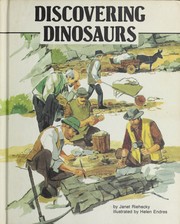
Discovering dinosaurs
Janet Riehecky
Fossils
Cecily Jobes

Fossils
Cecily Jobes
The dinosaurs
Richard Krueger

The dinosaurs
Richard Krueger
Fossil
Paul D. Taylor
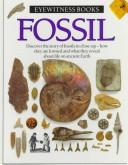
Fossil
Paul D. Taylor
Details
Book Length
- ISBN
- 0761409602
- Pages
- 80
- Publisher
- Cavendish Square Publishing, LLC
- Published
- October 1999
- Type
- Nonfiction
- Word Count
- 11,207
- Read-Aloud
- ~1h 15m
- Text Density
- Light Text