
Reviewed by HootRated editorial · Last updated
Astronomy
Dennis B. Fradin
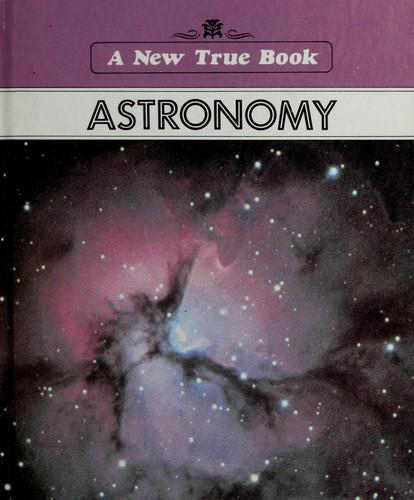
The text is written at a 3rd grade reading level, the subject matter is intended for younger children (ages 5–8), and the content is gentle with no concerning themes. Its HootRating code, C, means gentle content.
We may earn a commission from these links.
About This Book
Explore the wonders of space with easy-to-understand facts about stars, planets, and galaxies. Discover how astronauts travel beyond Earth and learn about the scientists who helped us understand the universe. Perfect for young space explorers eager to reach for the stars!
Quick Assessment
This is a Level 3-4 book with gentle content intensity. No notable content concerns flagged. Written for readers ages 5-8.
Why we rated Astronomy C (Gentle)
Astronomy is written at a Level 3-4 reading level across 45 pages (approximately 1,485 words). Reading-wise, most kids in grade 5 and up can manage Astronomy on their own; younger readers can enjoy it with a parent or teacher reading along.
Read aloud, Astronomy takes about 10 minutes, which fits within a single read-aloud session.
We rate Astronomy as C (Gentle) because the content sits in the "Gentle" range — no conflict beyond everyday childhood experiences. Across our four dimensions (emotional, physical, social, thematic) the book reads as evenly gentle; no single dimension stands out as a concern.
No specific content flags were raised by community reviewers, which is consistent with the gentle intensity score.
Thematically, Astronomy weaves together science & nature and adventure.
Good fit for
- ✓ Children in the Ages 5-8 range — the maturity and attention span match the story's pacing.
- ✓ Reluctant readers who need fast-paced, hook-heavy stories to stay engaged.
- ✓ Kids drawn to stories about science & nature, adventure.
- ✓ Readers who fall hard for one book and want a long series to live in — there are 27 more books in the New True Books series.
- ✓ Curious kids who prefer real-world topics over made-up stories.
Maybe not for
- ! Readers looking for something heavier — this is a gentle, low-stakes story by design.
For Parents
Content Intensity
C · GentleReading the HootRating code: the first letter is the content intensity (C = Gentle · L = Mild · M = Moderate · I = Intense · V = Very Intense); the second, when there is one, is the kind of content that drives it (E = Emotional · P = Physical · S = Social · T = Thematic). Reading level and age range are rated separately. How we rate
No conflict beyond everyday childhood experiences. Safe for sensitive readers.
Was our "Gentle" content intensity rating accurate for this book?
Reading Insights
Hook Factor
9/10High engagement — fast-paced, fun, and hard to put down. Great for reluctant readers.
Discussion Potential
1/10A lighter read — great for independent enjoyment.
Book DNA
Multi-dimensional content fingerprint
More in the New True Books Series
The Thirteen Colonies
Dennis B. Fradin

The Thirteen Colonies
Dennis B. Fradin
The flag of the United States
Dennis B. Fradin

The flag of the United States
Dennis B. Fradin
Mars
Dennis B. Fradin
Mars
Dennis B. Fradin
Saturn
Dennis B. Fradin
Saturn
Dennis B. Fradin
Venus
Dennis B. Fradin

Venus
Dennis B. Fradin
Earth
Dennis B. Fradin

Earth
Dennis B. Fradin
Jupiter
Dennis B. Fradin

Jupiter
Dennis B. Fradin
Mercury
Dennis B. Fradin
Mercury
Dennis B. Fradin
If your child liked this book, they might like these
Matched on content and themes — all rated for reading level and content intensity.
Astronomy in the Real World
Susan E. Hamen
Astronomy in the Real World
Susan E. Hamen
Space
Martha E. H. Rustad
Space
Martha E. H. Rustad
The galaxy
Gregory Vogt
The galaxy
Gregory Vogt
Comets, Meteors, and Asteroids (The Universe)
Comets, Meteors, and Asteroids (The Universe)
Space
Will Osborne
Space
Will Osborne
Stars and Constellations (The Universe)
Stars and Constellations (The Universe)
Asteroids and Comets
William B. Rice

Asteroids and Comets
William B. Rice
Stars
Gregory Vogt
Stars
Gregory Vogt
Details
Book Length
- ISBN
- 0516016733
- Pages
- 45
- Publisher
- Children's Press
- Published
- 1983
- Type
- Nonfiction
- Word Count
- 1,485
- Read-Aloud
- ~10 min
- Text Density
- Picture-Heavy