Reviewed by HootRated editorial · Last updated
Arcady's goal
Eugene Yelchin

The text is written at a 3rd grade reading level, the subject matter is intended for middle graders (ages 9–12), and the content has moderate intensity with some emotionally heavy themes. Its HootRating code, ME, means moderate content, mostly emotional.
We may earn a commission from these links.
About This Book
Arcady is no ordinary kid—he’s a soccer star in a place where every goal means more than just points on a scoreboard. In a world where trust is scarce and danger lurks, his kicks could win him food, friends, and maybe even freedom. But can believing in others and himself be the ultimate victory?
Themes
Quick Assessment
A twelve-year-old boy is sent to a state children's home in Soviet Russia after his parents are declared enemies of the state, and he turns to soccer to secure food, status, and safety. The story deals with family separation, political repression, poverty, and loneliness, handled through a child's perspective and a hopeful arc about friendship and self-belief. It suits most middle-grade readers, and parents may want to talk through the historical setting and why the regime treated families this way.
Why we rated Arcady's goal ME (Moderate)
Arcady's goal is written at a Level 3-4 reading level across 234 pages. Reading-wise, most kids in grade 5 and up can manage Arcady's goal on their own; younger readers can enjoy it with a parent or teacher reading along.
We rate Arcady's goal as ME (Moderate, mostly emotional) because the content sits in the "Moderate" range — moderate conflict that may involve loss, scary scenes, or interpersonal stakes. The strongest signals come from emotional weight, social complexity — these are the dimensions parents should evaluate against their reader's tolerance.
No specific content flags were raised by community reviewers, which is consistent with the moderate intensity score.
Thematically, Arcady's goal explores history, communism, foster care, juvenile fiction, and soccer — these threads give the book room to mean different things to different readers. Each of these themes is concrete enough to seed a real conversation, not just a moral lesson.
Good fit for
- ✓ Children in the Ages 9-12 range — the maturity and attention span match the story's pacing.
- ✓ Readers ready to talk through themes after they finish — there's enough substance for a meaningful conversation.
- ✓ Kids drawn to stories about history, communism, foster care.
Maybe not for
- ! Readers who get easily upset by emotional or moderately dark scenes — the conflict here is real, not just background flavor.
For Parents
Content Intensity
ME · Moderate · EmotionalReading the HootRating code: the first letter is the content intensity (C = Gentle · L = Mild · M = Moderate · I = Intense · V = Very Intense); the second, when there is one, is the kind of content that drives it (E = Emotional · P = Physical · S = Social · T = Thematic). Reading level and age range are rated separately. How we rate
Real stakes and emotional weight. May include sustained danger, loss, or bullying.
Was our "Moderate" content intensity rating accurate for this book?
Reading Insights
Discussion Potential
5/10Good conversation starter with themes worth exploring together.
Book DNA
Multi-dimensional content fingerprint
If your child liked this book, they might like these
Matched on content and themes — all rated for reading level and content intensity.
Team Fugee
Dirk McLean
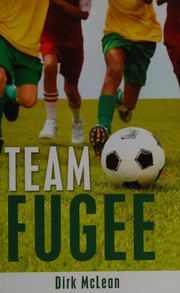
Team Fugee
Dirk McLean
Breaking Stalin's nose
Eugene Yelchin

Breaking Stalin's nose
Eugene Yelchin
Beyond Lucky
Sarah Aronson

Beyond Lucky
Sarah Aronson
Alex
Tessa Duder

Alex
Tessa Duder
Soccer hero
Stephanie True Peters
Soccer hero
Stephanie True Peters
School for sidekicks
Kelly McCullough

School for sidekicks
Kelly McCullough
Lost boy
Tim Green

Lost boy
Tim Green
Lay-ups and long shots
Joseph Bruchac
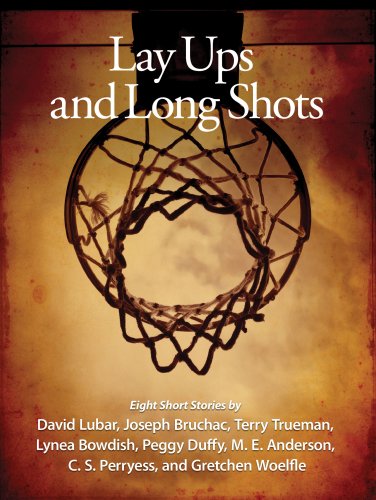
Lay-ups and long shots
Joseph Bruchac
Details
Book Length
- ISBN
- 9780805098440
- Pages
- 234
- Publisher
- Macmillan
- Published
- 2014
- Type
- Fiction