
Reviewed by HootRated editorial · Last updated
After the famine
Colette McCormack

After the famine
Age Rating, Reading Level & Content Guide
by Colette McCormack
The text is written at a 4th grade reading level, the subject matter is intended for middle graders (ages 9–12), and the content has moderate intensity with some emotionally heavy themes. Its HootRating code, MS, means moderate content, mostly social.
We may earn a commission from these links.
About This Book
After the famine, the hardest part of the journey is not the ocean crossing, it is the new life waiting on the other side. A young Irish girl leaves behind failed potato fields for the United States, and she discovers that hopes and hardships can arrive on the same ship. Her struggle to build a future from nothing shows exactly what it took to start over in a strange new country.
Quick Assessment
Follows a young Irish girl who emigrates to the United States after the 1840s potato famine, facing both the hope of a fresh start and the poverty and hardship that come with it. Parents should know it portrays hunger, struggle, and displacement with historical grounding rather than graphic detail, making it a useful companion for conversations about immigration and family survival.
Why we rated After the famine MS (Moderate)
After the famine is written at a Level 4-5 reading level across 126 pages. Reading-wise, most kids in grade 6 and up can manage After the famine on their own; younger readers can enjoy it with a parent or teacher reading along.
We rate After the famine as MS (Moderate, mostly social) because the content sits in the "Moderate" range — moderate conflict that may involve loss, scary scenes, or interpersonal stakes. The strongest signals come from emotional weight, social complexity — these are the dimensions parents should evaluate against their reader's tolerance.
Specific content flags noted by reviewers: Poverty & Hardship, Loss & Grief.
Thematically, After the famine explores historical, multicultural, and family — these threads give the book room to mean different things to different readers. Each of these themes is concrete enough to seed a real conversation, not just a moral lesson.
Good fit for
- ✓ Children in the Ages 9-12 range — the maturity and attention span match the story's pacing.
- ✓ Family book clubs, classroom read-alouds, and parents who want a strong conversation hook.
- ✓ Kids drawn to stories about historical, multicultural, family.
Maybe not for
- ! Readers who get easily upset by emotional or moderately dark scenes — the conflict here is real, not just background flavor.
- ! Children currently coping with grief — the themes may hit close to home.
For Parents
Content Intensity
MS · Moderate · SocialReading the HootRating code: the first letter is the content intensity (C = Gentle · L = Mild · M = Moderate · I = Intense · V = Very Intense); the second, when there is one, is the kind of content that drives it (E = Emotional · P = Physical · S = Social · T = Thematic). Reading level and age range are rated separately. How we rate
Real stakes and emotional weight. May include sustained danger, loss, or bullying.
Content Flags
Was our "Moderate" content intensity rating accurate for this book?
Reading Insights
Discussion Potential
7/10Rich themes that spark meaningful family conversation. Great for book clubs and read-alouds.
Book DNA
Multi-dimensional content fingerprint
If your child liked this book, they might like these
Matched on content and themes — all rated for reading level and content intensity.
Good-bye to the trees
Vicky Shiefman

Good-bye to the trees
Vicky Shiefman
Children of Flight
Maria Armengol Acierno

Children of Flight
Maria Armengol Acierno
Sarah on her own
Karen Mueller Coombs

Sarah on her own
Karen Mueller Coombs
Millie and the Great Drought
Natasha Deen

Millie and the Great Drought
Natasha Deen
Beth makes a friend
Susan Beth Pfeffer
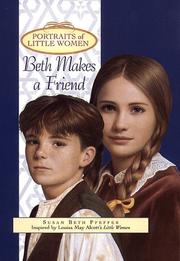
Beth makes a friend
Susan Beth Pfeffer
The runaway's gold
Emilie Christie Burack

The runaway's gold
Emilie Christie Burack
Red berries, white clouds, blue sky
Sandra Dallas

Red berries, white clouds, blue sky
Sandra Dallas
Fallout
Trudy Krisher

Fallout
Trudy Krisher
Details
Book Length
- ISBN
- 1855941422
- Pages
- 126
- Publisher
- Bright Sparks
- Published
- 1996
- Type
- Fiction