
A parent's guide to identifying and responding to childhood trauma
Bruce Duncan Perry

A parent's guide to identifying and responding to childhood trauma
Age Rating, Reading Level & Content Guide
And Other Stories from a Child Psychiatrist's Notebook--What Traumatized Children Can Teach Us About Loss, Love, and Healing
by Bruce Duncan Perry
The text is written at a 2nd grade reading level, the subject matter is intended for younger children (ages 5–8), and the content is mild with minimal sensitive material.
We may earn a commission from these links. Bookshop.org supports independent bookstores with every purchase.
About This Book
What if your brain could change when you feel scared or sad? Imagine learning how brave kids can grow strong again after tough times. Discover the amazing ways love and care can help heal even the deepest hurts, but how do we make sure every child gets that chance?
Themes
Quick Assessment
This book offers young readers an introduction to understanding how trauma impacts children's brains and emotions, presenting complex ideas in an accessible way for ages 5-8. It emphasizes resilience and the healing power of nurturing relationships, making it a valuable resource for parents wanting to support children through stress and fear. The content is gentle and hopeful, suitable for early readers with guidance.
Why we rated A parent's guide to identifying and responding to childhood trauma 7LE
A parent's guide to identifying and responding to childhood trauma is written at a Level 2 reading level across 39 pages. Strong independent readers around grade 3.0 can typically handle this book on their own; with parent or teacher support, A parent's guide to identifying and responding to childhood trauma works for readers up to grade 4.0.
We rate A parent's guide to identifying and responding to childhood trauma as 7LE ("Light — Emotional") because the content sits in the "Mild" range — mild conflict — the kind a child encounters in normal play and sibling life. Across our four dimensions (emotional, physical, social, thematic) the book reads as evenly mild; no single dimension stands out as a concern.
No specific content flags were raised by community reviewers, which is consistent with the mild intensity score.
Thematically, A parent's guide to identifying and responding to childhood trauma explores child psychology, psychic trauma in children, fear in children, resilience, and stress in children — these threads give the book room to mean different things to different readers.
Good fit for
- ✓ Children in the Ages 5-8 range — the maturity and attention span match the story's pacing.
- ✓ Patient readers who enjoy slower, character-driven stories.
- ✓ Kids drawn to stories about child psychology, psychic trauma in children, fear in children.
Maybe not for
- ! Reluctant readers who need a fast hook — the pacing here rewards patience.
For Parents
Content Intensity
7LE — Light — EmotionalLight conflict or tension. Mild peril resolved quickly.
Was our "Mild" content intensity rating accurate for this book?
Reading Insights
Hook Factor
1/10A steady, thoughtful read that rewards patient readers.
Discussion Potential
1/10A lighter read — great for independent enjoyment.
Book DNA
Multi-dimensional content fingerprint
Similar Books
Based on content and theme analysis
Every Kid's Guide to Coping with Childhood Traumas
Joy Berry
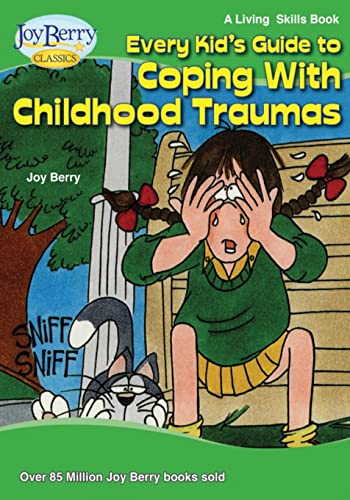
Every Kid's Guide to Coping with Childhood Traumas
Joy Berry
Child Trauma Handbook
Ricky Greenwald
Child Trauma Handbook
Ricky Greenwald
Children and trauma
Cynthia Monahon

Children and trauma
Cynthia Monahon
Helping Children Cope with Trauma
Ruth Pat-Horenczyk

Helping Children Cope with Trauma
Ruth Pat-Horenczyk
Psychological Trauma and the Developing Brain
Phyllis T. Stien
Psychological Trauma and the Developing Brain
Phyllis T. Stien
Childhood trauma
Ursula Markham
Childhood trauma
Ursula Markham
Details
Book Length
- ISBN
- 9781557404404
- Pages
- 39
- Publisher
- Basic Books
- Published
- 2002
- Type
- Fiction