Will Robots Ever Be Smarter Than Humans? Theories about Artificial Intelligence
Tom Jackson
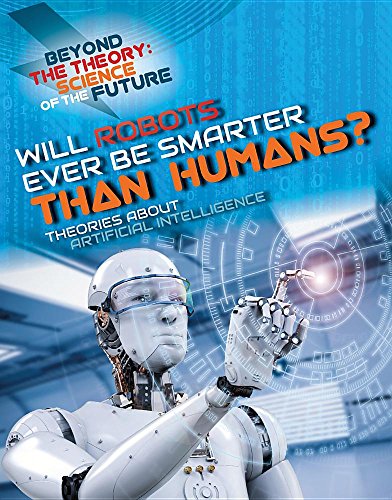
Will Robots Ever Be Smarter Than Humans? Theories about Artificial Intelligence
Age Rating, Reading Level & Content Guide
by Tom Jackson
The text is written at a 3rd grade reading level, the subject matter is intended for younger children (ages 5–8), and the content is gentle with no concerning themes.
We may earn a commission from these links. Bookshop.org supports independent bookstores with every purchase.
About This Book
Can robots ever think just like humans? Imagine machines that can learn, solve problems, and maybe even dream! What could happen if robots become smarter than us?
Themes
Quick Assessment
This early reader introduces children aged 5-8 to the fascinating world of artificial intelligence, tracing its history from early automatons to modern innovations like self-driving cars and smart homes. The book uses vivid artwork and accessible language to engage young readers with complex scientific ideas in an age-appropriate way. It encourages curiosity about technology and its future without overwhelming detail.
Why we rated Will Robots Ever Be Smarter Than Humans? Theories about Artificial Intelligence 8C
Will Robots Ever Be Smarter Than Humans? Theories about Artificial Intelligence is written at a Level 3 reading level across 50 pages. Strong independent readers around grade 4.0 can typically handle this book on their own; with parent or teacher support, Will Robots Ever Be Smarter Than Humans? Theories about Artificial Intelligence works for readers up to grade 5.0.
We rate Will Robots Ever Be Smarter Than Humans? Theories about Artificial Intelligence as 8C ("Clear") because the content sits in the "Gentle" range — no conflict beyond everyday childhood experiences. Across our four dimensions (emotional, physical, social, thematic) the book reads as evenly gentle; no single dimension stands out as a concern.
No specific content flags were raised by community reviewers, which is consistent with the gentle intensity score.
Thematically, Will Robots Ever Be Smarter Than Humans? Theories about Artificial Intelligence explores science & nature, artificial intelligence, and juvenile literature — these threads give the book room to mean different things to different readers.
Good fit for
- ✓ Children in the Ages 5-8 range — the maturity and attention span match the story's pacing.
- ✓ Patient readers who enjoy slower, character-driven stories.
- ✓ Kids drawn to stories about science & nature, artificial intelligence, juvenile literature.
Maybe not for
- ! Reluctant readers who need a fast hook — the pacing here rewards patience.
For Parents
Content Intensity
8C — ClearNo conflict beyond everyday childhood experiences. Safe for sensitive readers.
Was our "Gentle" content intensity rating accurate for this book?
Reading Insights
Hook Factor
1/10A steady, thoughtful read that rewards patient readers.
Discussion Potential
1/10A lighter read — great for independent enjoyment.
Book DNA
Multi-dimensional content fingerprint
Similar Books
Based on content and theme analysis
Artificial Intelligence
Rebecca Felix
Artificial Intelligence
Rebecca Felix
Robots and artificial intelligence
Nicolas Brasch

Robots and artificial intelligence
Nicolas Brasch
The world's smartest machines
Linda Tagliaferro

The world's smartest machines
Linda Tagliaferro
Artificial Intelligence
Henry Brook

Artificial Intelligence
Henry Brook
Artificial Intelligence
Joe Greek
Artificial Intelligence
Joe Greek
Robotics and artificial intelligence
Sandy Fritz
Robotics and artificial intelligence
Sandy Fritz
Details
Book Length
- ISBN
- 9781538226599
- Pages
- 50
- Publisher
- Gareth Stevens Publishing LLLP
- Published
- 2018
- Type
- Fiction