
Reviewed by HootRated editorial · Last updated
The sign of the beaver
Elizabeth George Speare
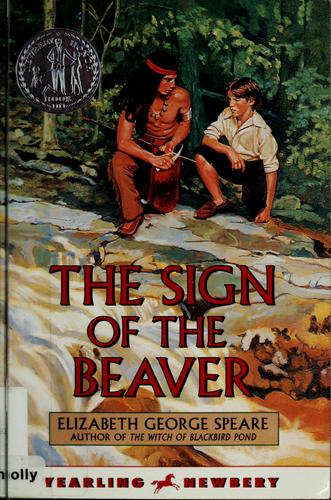
The sign of the beaver
Age Rating, Reading Level & Content Guide
by Elizabeth George Speare
The text is written at a 4th grade reading level, the subject matter is intended for middle graders (ages 9–12), and the content is mild with minimal sensitive material. Its HootRating code, LE, means mild content, mostly emotional.
We may earn a commission from these links.
About This Book
The crackling of the forest fire fills the air, mingling with the scent of pine and earth. A boy named Matt stands alone, his heart pounding as he learns to survive in the wild wilderness. Amid the towering trees and whispering winds, a new friendship begins to grow — but trust is fragile in the untamed frontier.
Themes
Quick Assessment
Set in the 18th-century American frontier, this historical fiction novel follows a young boy's journey to survive alone in the wilderness and his evolving friendship with a Native American boy. Suitable for readers aged 9-12, it explores themes of survival, cultural understanding, and friendship with sensitive portrayals of frontier life and Native American culture. Parents should note some mild peril and cultural conflicts inherent to the setting.
Why we rated The sign of the beaver LE (Mild)
The sign of the beaver is written at a Level 4-5 reading level across 135 pages. Reading-wise, most kids in grade 6 and up can manage The sign of the beaver on their own; younger readers can enjoy it with a parent or teacher reading along.
We rate The sign of the beaver as LE (Mild, mostly emotional) because the content sits in the "Mild" range — mild conflict — the kind a child encounters in normal play and sibling life. Across our four dimensions (emotional, physical, social, thematic) the book reads as evenly mild; no single dimension stands out as a concern.
No specific content flags were raised by community reviewers, which is consistent with the mild intensity score.
Thematically, The sign of the beaver explores frontier and pioneer life, friendship, survival, indians of north america, and children's fiction — these threads give the book room to mean different things to different readers.
Good fit for
- ✓ Children in the Ages 9-12 range — the maturity and attention span match the story's pacing.
- ✓ Kids drawn to stories about frontier and pioneer life, friendship, survival.
- ✓ Readers (and parents) who care about award-recognized writing — The sign of the beaver carries an award.
Maybe not for
- ! Readers looking for something heavier — this is a gentle, low-stakes story by design.
For Parents
Content Intensity
LE · Mild · EmotionalReading the HootRating code: the first letter is the content intensity (C = Gentle · L = Mild · M = Moderate · I = Intense · V = Very Intense); the second, when there is one, is the kind of content that drives it (E = Emotional · P = Physical · S = Social · T = Thematic). Reading level and age range are rated separately. How we rate
Light conflict or tension. Mild peril resolved quickly.
Was our "Mild" content intensity rating accurate for this book?
Reading Insights
Discussion Potential
1/10A lighter read — great for independent enjoyment.
Book DNA
Multi-dimensional content fingerprint
If your child liked this book, they might like these
Matched on content and themes — all rated for reading level and content intensity.
Hatchet
Gary Paulsen

Hatchet
Gary Paulsen
Woods Runner
Gary Paulsen

Woods Runner
Gary Paulsen
The witch of Blackbird Pond
Elizabeth George Speare

The witch of Blackbird Pond
Elizabeth George Speare
My Side of the Mountain (Puffin Modern Classics)
Jean Craighead George
My Side of the Mountain (Puffin Modern Classics)
Jean Craighead George
Nuts to you
Lynne Rae Perkins

Nuts to you
Lynne Rae Perkins
The courage of Sarah Noble
Alice Dalgliesh
The courage of Sarah Noble
Alice Dalgliesh
Julie of the Wolves
Jean Craighead George

Julie of the Wolves
Jean Craighead George
The Wolves of Willoughby Chase
Joan Aiken
The Wolves of Willoughby Chase
Joan Aiken
Details
Book Length
- ISBN
- 9780440479000
- Pages
- 135
- Publisher
- Dell
- Published
- 1983
- Type
- Fiction