Reviewed by HootRated editorial · Last updated
Rites of Passage
Quentin Beresford, Paul Omaji
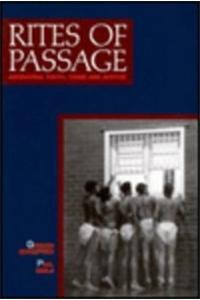
Rites of Passage
Age Rating, Reading Level & Content Guide
Aboriginal Youth, Crime and Justice
by Quentin Beresford, Paul Omaji
The text is written at a 6th grade reading level, the subject matter is intended for teens (ages 13+), and the content has moderate intensity with some emotionally heavy themes. Its HootRating code, ME, means moderate content, mostly emotional.
We may earn a commission from these links.
About This Book
Why do some kids find themselves in trouble more often than others? Imagine a world where history, culture, and the law collide, shaping the paths of young lives. What secrets lie behind the stories of those trying to find their way through difficult times?
Themes
Quick Assessment
Rites of Passage examines why Aboriginal children in Western Australia are more likely to become involved in offending than their non-Aboriginal counterparts, drawing on history, law, and social science to look at socioeconomic and cultural causes. It is written for an adult market and suits mature teens, with discussion of juvenile offending, the criminal justice system, racial discrimination, and poverty that may prompt serious conversation. Parents may want to preview it for its frank treatment of institutional failures and the policy questions it raises.
Why we rated Rites of Passage ME (Moderate)
Rites of Passage is written at a Level 6 reading level across 200 pages. Upper Grades (Ages 13+) is the typical interest range for this book — readers in that age band have the maturity and attention span suited to the story, separate from whether they can decode the words.
We rate Rites of Passage as ME (Moderate, mostly emotional) because the content sits in the "Moderate" range — moderate conflict that may involve loss, scary scenes, or interpersonal stakes. The strongest signals come from emotional weight — these are the dimensions parents should evaluate against their reader's tolerance.
Specific content flags noted by reviewers: Bullying, Identity & Self-Discovery, Social Justice.
Thematically, Rites of Passage explores history, law, juvenile offenders, social science, and multicultural — these threads give the book room to mean different things to different readers. Each of these themes is concrete enough to seed a real conversation, not just a moral lesson.
Good fit for
- ✓ Children in the Ages 13+ range — the maturity and attention span match the story's pacing.
- ✓ Family book clubs, classroom read-alouds, and parents who want a strong conversation hook.
- ✓ Kids drawn to stories about history, law, juvenile offenders.
- ✓ Curious kids who prefer real-world topics over made-up stories.
Maybe not for
- ! Readers who get easily upset by emotional or moderately dark scenes — the conflict here is real, not just background flavor.
For Parents
Content Intensity
ME · Moderate · EmotionalReading the HootRating code: the first letter is the content intensity (C = Gentle · L = Mild · M = Moderate · I = Intense · V = Very Intense); the second, when there is one, is the kind of content that drives it (E = Emotional · P = Physical · S = Social · T = Thematic). Reading level and age range are rated separately. How we rate
Real stakes and emotional weight. May include sustained danger, loss, or bullying.
Content Flags
Was our "Moderate" content intensity rating accurate for this book?
Reading Insights
Discussion Potential
7/10Rich themes that spark meaningful family conversation. Great for book clubs and read-alouds.
Book DNA
Multi-dimensional content fingerprint
If your child liked this book, they might like these
Matched on content and themes — all rated for reading level and content intensity.
Child survival under threat
Dominic E. Azuh

Child survival under threat
Dominic E. Azuh
Teens in prison
Gail Stewart
Teens in prison
Gail Stewart
Gangs
Gail Stewart
Gangs
Gail Stewart
Teen fathers
Paul Lang
Teen fathers
Paul Lang
Oklahoma
Tamra Orr

Oklahoma
Tamra Orr
Parallel journeys
Eleanor H. Ayer
Parallel journeys
Eleanor H. Ayer
Hey, kiddo
Jarrett Krosoczka

Hey, kiddo
Jarrett Krosoczka
Children under apartheid
International Defence and Aid Fund. Research, Information, and Publicity Dept

Children under apartheid
International Defence and Aid Fund. Research, Information, and Publicity Dept
Details
Book Length
- ISBN
- 9781863681377
- Pages
- 200
- Publisher
- Fremantle Arts Center Press
- Published
- 1996
- Type
- Nonfiction