
Consuming innocence
Karen Brooks
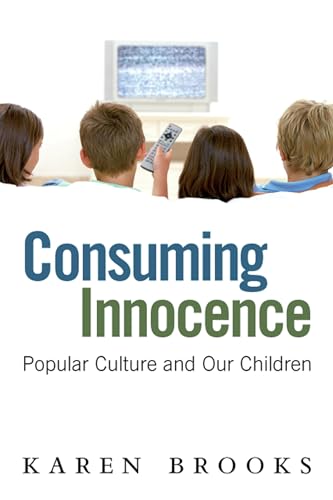
Consuming innocence
Age Rating, Reading Level & Content Guide
Popular Culture and Our Children
by Karen Brooks
The text is written at a 7th grade reading level, the subject matter is intended for middle graders (ages 9–12), and the content is mild with minimal sensitive material.
We may earn a commission from these links. Bookshop.org supports independent bookstores with every purchase.
About This Book
The buzz of TV commercials fills the room, mixing with the glow of screens everywhere you look. Kids just like you are growing up surrounded by flashing images and catchy tunes that tug at their hearts and minds. But what happens when all this noise starts to change the way childhood feels? It’s a journey that’s both fascinating and a little bit sad.
Themes
Quick Assessment
Consuming Innocence explores how popular culture impacts children's sense of innocence in contemporary Australia. Written for middle-grade readers, it offers a thoughtful perspective on how media and societal influences shape childhood experiences. Parents should know it discusses social conditions and media effects in an age-appropriate way without graphic content.
Why we rated Consuming innocence 12LE
Consuming innocence is written at a Level 7 reading level across 324 pages. Strong independent readers around grade 8.0 can typically handle this book on their own; with parent or teacher support, Consuming innocence works for readers up to grade 9.0.
We rate Consuming innocence as 12LE ("Light — Emotional") because the content sits in the "Mild" range — mild conflict — the kind a child encounters in normal play and sibling life. Across our four dimensions (emotional, physical, social, thematic) the book reads as evenly mild; no single dimension stands out as a concern.
No specific content flags were raised by community reviewers, which is consistent with the mild intensity score.
Thematically, Consuming innocence explores popular culture, children, social conditions, media influence, and family — these threads give the book room to mean different things to different readers.
Good fit for
- ✓ Children in the Ages 9-12 range — the maturity and attention span match the story's pacing.
- ✓ Patient readers who enjoy slower, character-driven stories.
- ✓ Kids drawn to stories about popular culture, children, social conditions.
- ✓ Curious kids who prefer real-world topics over made-up stories.
Maybe not for
- ! Readers whose emotional readiness lags behind their decoding skills — this book's intensity outruns its reading level, a classic "gifted kid" mismatch.
- ! Reluctant readers who need a fast hook — the pacing here rewards patience.
For Parents
Content Intensity
12LE — Light — EmotionalLight conflict or tension. Mild peril resolved quickly.
Was our "Mild" content intensity rating accurate for this book?
Reading Insights
Hook Factor
1/10A steady, thoughtful read that rewards patient readers.
Discussion Potential
2/10A lighter read — great for independent enjoyment.
Book DNA
Multi-dimensional content fingerprint
Similar Books
Based on content and theme analysis
KIds' Media Culture (Console-Ing Passions)
Marsha Kinder
KIds' Media Culture (Console-Ing Passions)
Marsha Kinder
Childhood in Consumer Societies
Liz Frost

Childhood in Consumer Societies
Liz Frost
Media and the Sexualization of Childhood
Barrie Gunter

Media and the Sexualization of Childhood
Barrie Gunter
Media and the American Child
George A. Comstock

Media and the American Child
George A. Comstock
Kids and Media in America
Donald F. Roberts

Kids and Media in America
Donald F. Roberts
Children, Adolescents, and the Media
Barbara J. Wilson

Children, Adolescents, and the Media
Barbara J. Wilson
Details
Book Length
- ISBN
- 9780702236457
- Pages
- 324
- Publisher
- Univ. of Queensland Press
- Published
- 2008
- Type
- Nonfiction